Quick pick
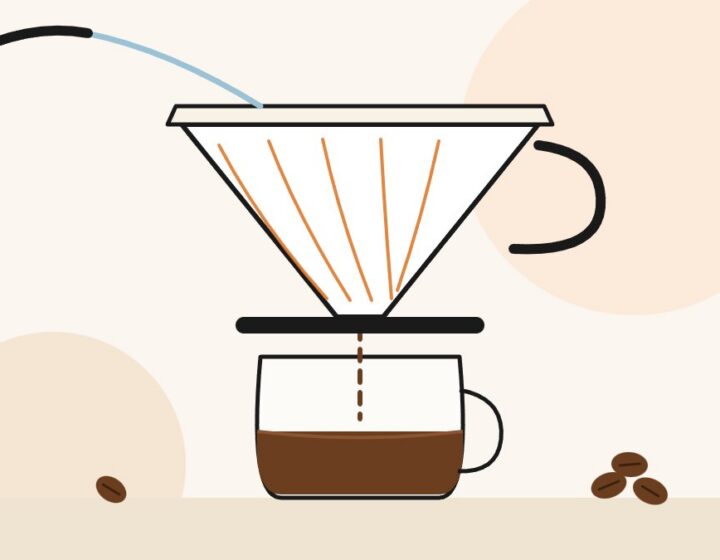
Hario V60 plastic dripper: a very cheap dripper that makes excellent coffee with a decent grinder.
The Short Answer
Budget coffee equipment that performs well above its price includes the Hario V60 Plastic Dripper ($12), Baratza Encore grinder ($140), and AeroPress Original ($40). These products often compete with premium alternatives because they focus on function rather than finish.
Coffee brewed with budget equipment that costs less than a monthly latte habit can hold its own against setups built around $5,000 espresso machines and $800 grinders.
In coffee gear, price and performance are only loosely linked. Some of the best equipment is affordable because manufacturers price it to win market share, not because it performs worse.
The sweet spot for value isn’t where most people think it is. It’s not in the premium tier where you pay for materials and aesthetics. It’s not in the ultra-budget category where corners get cut on everything that matters.
It is in the middle, where companies put their effort into function rather than finish.
Value Engineering in Coffee Gear
Why Some Budget Gear Outperforms Premium Equipment
The coffee equipment market has changed a lot in the past decade. Better manufacturing, better materials and more competition have produced what you could call “value engineering”: products designed to maximize performance per dollar.
The Traditional Premium Model:
- Expensive materials (often unnecessary)
- Hand-assembly (inconsistent quality)
- Premium branding (marketing costs)
- Limited production (artificial scarcity)
- Result: High price, variable performance
The Value Engineering Model:
- Optimal materials for function
- Precision manufacturing
- Direct-to-consumer sales
- Focus on core performance
- Result: Lower price, consistent quality
That means you can often get close to premium performance without paying premium prices, if you know where to look.
Where Performance Levels Off
Most coffee equipment performance plateaus well before the price does. The difference between a $50 and $150 grinder can be dramatic. The difference between a $150 and $450 grinder? Often negligible for home users.
Diminishing returns, roughly:
- 0-$100: Large performance gains
- $100-300: Significant improvements
- $300-600: Marginal gains
- $600+: Mostly aesthetics and features
Knowing this curve helps you find equipment that performs above its price.
The Best Budget Coffee Equipment
Hario V60 Plastic Dripper ($12)
Why it stands out: This injection-molded plastic dripper holds its own against ceramic and metal drippers that cost many times more.
The design: Hario’s spiral ridges and 60-degree cone promote an even flow. Plastic also helps: its low thermal mass draws less heat from the brew, and injection molding keeps every unit consistent.
What reviewers note:
- Can brew in the SCA’s recommended 18-22% extraction range
- Widely rated as competitive with drippers costing far more
- Used by professional baristas worldwide in competition
The Catch: Requires technique development. This isn’t a forgiving dripper—it rewards skill and punishes poor technique.
Value: $12 for pour-over results that compete with far pricier drippers.
Baratza Encore ($140)
Why it stands out: A capable burr grinder at a price point where most competitors offer blade grinders or poor burr sets. The Encore is one of the most recommended budget grinders for home use.
The design: Baratza built the Encore around its M2 conical burr set and kept costs down everywhere else.
Performance Analysis:
- Grind consistency competes with pricier grinders for filter brewing
- Uses Baratza’s M2 conical burrs
- Minimal grind retention
- Good consistency for drip and pour-over
The Limitations: Plastic construction, slower grinding speed, limited aesthetic appeal. But none of these affect coffee quality.
For a comparison of grinders across all price points, check out our guide to the best coffee grinders for every budget and brewing method.
AeroPress Original ($40)
The Backstory: Invented by a flying-disc designer who approached coffee brewing as an engineering problem.
Why It Works: Immersion brewing with pressure filtration creates a unique extraction profile. The paper microfilter removes oils and fines, producing very clean coffee.
Strengths:
- Easy to hit a balanced extraction
- Faster than most brewing methods
- Hard to over-extract
- Very forgiving of mistakes
The Versatility Factor: Makes everything from espresso-style concentrates to clean filter coffee. Travel-friendly, very durable, and tolerant of grind quality.
Following: It has its own world championship.
Bonavita Connoisseur ($150)
The Premise: An automatic drip machine built around proper brewing principles.
The Bonavita Connoisseur can make coffee close to good pour-over with no technique required, and it holds proper brewing temperature throughout the brew, which many budget machines do not. For more on temperature consistency in affordable brewers, see our analysis of coffee makers that actually keep coffee hot all day.
The Execution: SCA-certified brewing temperature, pre-infusion, optimal contact time, even water distribution. It gets right the basics many drip machines get wrong.
Performance Comparison:
- Coffee close to good pour-over
- Zero technique required
- More consistent than most manual brewing at home
Value: $150 for SCA-certified automatic brewing, compared with $300-500 for many premium brewers with similar performance.
The Catch: Basic aesthetics, limited features. But for good coffee with minimal effort, it is hard to beat at this price.
Timemore C2 Manual Grinder ($60)
The Appeal: Burr grinding in a package small enough to travel with.
Build Quality: Aluminum construction, stainless steel burrs, smooth adjustment mechanism.
Performance Analysis:
- Grind consistency competes with many electric grinders
- Well suited to pour-over brewing
- Adequate for espresso with proper technique
Portability: Light and compact enough for a laptop bag, which makes it a good travel grinder.
Clever Dripper ($25)
The Concept: Combine immersion brewing’s forgiveness with pour-over’s clarity.
How It Works: Immersion brewing with a valve that releases when placed on a cup. It is forgiving like a French press and clean like pour-over.
Performance Profile:
- Consistent extraction regardless of pouring technique
- Nearly impossible to mess up
- Produces good coffee reliably
The Main Advantage: It removes pour-over’s dependence on technique, so beginners can make good coffee right away.
Value: $25 for forgiving brewing that competes with methods that take much longer to learn.
Fellow Prismo ($30)
What It Does: A cap with a metal filter that turns the AeroPress into an espresso-style brewer.
How It Works: A pressure-actuated valve holds the water until you press, and the metal filter lets oils through for a fuller body.
Performance Gains:
- Enables espresso-style shots
- Eliminates need for paper filters
- Creates fuller-bodied coffee
- Makes a $40 brewer more versatile
Value: A $30 accessory that adds real versatility to a brewer you may already own.
Why Budget Gear Has Improved
Materials and Manufacturing
Advanced Plastics: Modern polymers offer durability and thermal properties that compete with traditional materials at a fraction of the cost.
Precision Manufacturing: CNC machining and injection molding create consistency that hand-assembly can’t match.
Burr Technology: Ceramic and steel burr sets have become commoditized, allowing budget grinders to use premium cutting elements.
Design Philosophy Shifts
Function Over Form: Budget champions prioritize performance over aesthetics, resulting in better coffee at lower prices.
Modular Design: Replaceable parts and upgrade paths extend equipment life and value.
User-Centric Engineering: Designing for real-world use rather than showroom appeal.
The Hidden Costs of Premium Equipment
What the Premium Pays For
- Materials Premium: paying extra for “premium” materials that don’t improve performance
- Brand Tax: paying extra for prestigious names
- Aesthetic Premium: paying extra for visual appeal
- Feature Bloat: paying extra for features most users never need
Maintenance
Premium equipment often requires:
- Specialized cleaning products
- Professional servicing
- Expensive replacement parts
- Careful handling
Budget champions typically offer:
- Standard maintenance requirements
- User-serviceable parts
- Affordable replacements
- Durable construction
Building a Complete Budget Setup
The $200 Coffee Station
- Grinder: Timemore C2 Manual ($60)
- Brewer: Hario V60 Plastic + Filters ($20)
- Scale: Basic digital scale ($25)
- Kettle: Stovetop gooseneck ($35)
- Accessories: Tamper, cleaning supplies ($60)
Total: $200 for a complete pour-over setup
The $400 Espresso Setup
- Grinder: Baratza Encore ($140)
- Machine: Flair Espresso Maker ($200)
- Accessories: Scale, tamper, cups ($60)
Total: $400 for a manual espresso setup.
The $150 Automatic Solution
- Brewer: Bonavita Connoisseur ($150)
- Grinder: Use pre-ground quality coffee
- Accessories: Thermal carafe, filters ($50)
Total: $200 for effortless, consistent coffee
What Reviews and Owners Report
CoffeeLogik hasn’t run its own lab comparisons, but independent reviews and owner feedback point the same way:
- V60 plastic vs. pricier ceramic drippers: little to no difference in the cup once you account for preheating
- Baratza Encore vs. more expensive grinders: the gap is small for drip and pour-over, and bigger for espresso
- AeroPress vs. expensive brewing systems: reviewers routinely rank it among the best-value brewers available
For most home brewers, technique and fresh beans matter more than the last few percent of equipment performance.
The Upgrade Path Strategy
Start Smart, Upgrade Strategically
- Phase 1: Master fundamentals with budget champions
- Phase 2: Identify specific limitations in your setup
- Phase 3: Upgrade only components that address real problems
- Phase 4: Invest in premium gear only when you can articulate why
Most of the Performance for Less
Budget champions typically deliver most of the performance of premium gear at a fraction of the cost. For most users, the last bit of performance isn’t worth the price premium.
Common Misconceptions About Budget Equipment
“Cheap Means Poor Quality”
Reality: Modern manufacturing allows excellent quality at low prices through efficiency, not corner-cutting.
“You Get What You Pay For”
Reality: You often pay for branding, aesthetics, and features that don’t improve coffee quality.
“Budget Gear Won’t Last”
Reality: Many budget champions are more durable than premium alternatives due to simpler, more robust designs.
“Professionals Don’t Use Budget Equipment”
Reality: Many professionals use budget equipment when it performs better than expensive alternatives.
Market Forces
Why Budget Champions Exist
- Market Penetration: Companies price aggressively to gain market share
- Manufacturing Scale: High-volume production reduces per-unit costs
- Direct Sales: Eliminating retail markup allows lower prices
- Competition: Intense competition drives innovation and value
Pressure on Premium Pricing
Consumers are increasingly rejecting premium pricing for marginal gains, forcing manufacturers to compete on value rather than prestige.
Where to Buy These Budget Picks
Current listings for the gear discussed above.
- Hario V60 plastic dripper: a very cheap dripper that makes excellent coffee with a decent grinder.
- Baratza Encore: the long-standing entry-level burr grinder, with parts sold separately.
- AeroPress: forgiving, fast and easy to clean.
- Bonavita 8-Cup Coffee Maker: SCA-certified drip at a lower price than most certified machines.
- TIMEMORE Chestnut C2: a capable hand grinder for travel or small batches.
- Clever Coffee Dripper: immersion and paper filtration in one simple brewer.
- Fellow Prismo: an AeroPress cap that adds a pressure-actuated valve and a metal filter.
Frequently Asked Questions
Is budget coffee equipment reliable long-term?
Yes, many budget champions like the Hario V60 and Baratza Encore have long track records with proper maintenance. Their simpler designs often make them more durable than complex premium alternatives.
Can budget equipment make espresso-quality coffee?
Yes. The Flair Espresso Maker can pull real espresso, and the setup above comes in under $400 total.
How much should I spend on my first coffee setup?
A complete budget coffee equipment setup costs $150-400, depending on your brewing preferences. Start with the $200 pour-over station for maximum versatility and room to grow.
Conclusion
Good coffee no longer requires expensive equipment. The budget picks here show how much value is available at the low end of the market.
Most of the performance gains happen in the budget tier. Once you understand brewing fundamentals and have quality equipment that executes them properly, additional spending yields diminishing returns.
This doesn’t mean premium equipment is worthless—it serves specific needs for specific users. But for most coffee drinkers, good budget gear is a better starting point than expensive equipment.
Start with proven, affordable gear, learn the fundamentals, and upgrade only when you can name a specific limitation.