Choosing between a manual and an electric coffee grinder is about more than convenience. The grinder shapes every cup you brew, from extraction uniformity to flavor clarity.
Quick pick
Baratza Encore ESP: an affordable electric burr grinder that covers filter and espresso.
The Short Answer
Premium manual grinders offer excellent grind quality and minimal heat for roughly $150-300, while electric grinders provide convenience and speed but generally cost more to match that quality. Choose manual for precision on a budget, electric for convenience and high-volume brewing.
This guide breaks down the technical and practical differences between the two, based on manufacturer specs, independent reviews and owner feedback.
The Science of Grinding: Why Particle Distribution Matters
Grinding creates surface area for extraction, and a good grinder does it while keeping particle sizes consistent.
Surface Area and Extraction
Extraction rate depends heavily on particle surface area, so finer grounds extract faster. Making particles smaller is not enough on its own, though: a uniform particle size distribution is what allows even extraction across the whole coffee bed.
Inconsistent grinding can push a cup from a balanced extraction (around 20%) toward an under-extracted cup that tastes sour and hollow.
The Uniformity Coefficient
Coffee researchers often describe grind quality with measures like the uniformity coefficient, a measure of particle size distribution where lower numbers indicate better consistency. Professional-grade grinders score far better than cheap consumer grinders.
Manual Grinders
Burr Design
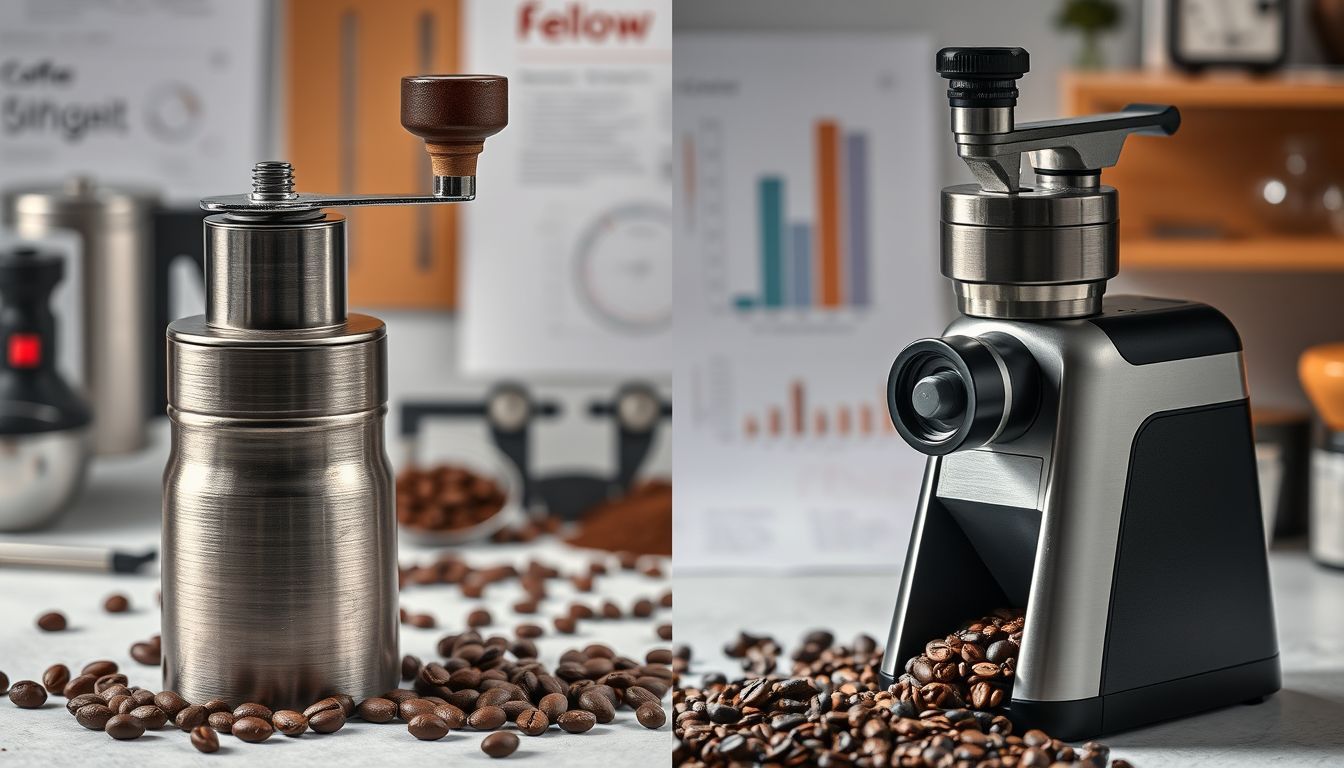
Manual grinders, particularly high-end models like the Comandante C40 or 1Zpresso JX-Pro, use carefully engineered burrs made to tight tolerances. These grinders typically feature:
- Conical burr sets with precise manufacturing tolerances
- Slow hand-cranked grinding that adds very little heat
- Stepless or micro-stepped adjustment systems for precise control
Performance Metrics
Premium hand grinders are known for:
- Excellent uniformity for pour-over and, on the best models, espresso
- Very little heat added during grinding
- Near-zero retention, since grounds drop straight into the catch cup
The Heat Factor
A key advantage of manual grinding is low heat. Electric grinders generate heat through friction, especially cheaper high-speed grinders during extended grinding sessions. This heat can volatilize delicate aromatic compounds, particularly the light esters and aldehydes that contribute to coffee’s bright, floral notes.
Manual grinders add very little heat, which helps preserve these volatile compounds. That makes them appealing for light roasts, where delicate flavors matter most.
Grind Quality Analysis
Independent reviewers regularly rate top-tier hand grinders like the Comandante C40 among the most consistent grinders at any price for filter coffee, which is why they’re so popular with enthusiasts.
Electric Grinders
Motor Technology and Burr Speed
Modern electric grinders use motor designs that balance speed with quality:
- Direct drive motors (Baratza Forte, Mahlkönig EK43) for consistent torque
- Gear reduction systems to optimize burr speed
- Variable speed controls for different brewing methods
Performance Characteristics
High-end electric grinders like the Mahlkönig EK43 or Fellow Ode can match hand grinders on consistency, grind far faster, and retain some grounds in the chute.
The Speed Advantage
Electric grinders are much faster. A manual grinder might require 60-90 seconds to grind 20g of coffee, while an electric grinder accomplishes the same task in 8-15 seconds. That speed matters on busy mornings, in commercial settings, and for espresso drinkers pulling several shots a day.
Heat Management in Modern Electrics
Contemporary electric grinder design has largely addressed historical heat concerns through:
- Low-speed motors (400-1400 RPM)
- Thermal management systems with heat sinks
- Burr materials with superior heat dissipation properties
Manual vs Electric Coffee Grinder: Side-by-Side
| Factor | Premium Manual | High-End Electric | Budget Electric |
|---|---|---|---|
| Grind consistency | Excellent | Excellent | Fair to good |
| Heat during grinding | Minimal | Low | Higher |
| Retention | Near zero | Low | Often noticeable |
| Time to grind 20g | About 30-90 seconds | Under 20 seconds | Under 20 seconds |
| Noise | Quiet | Moderate | Often loud |
For most filter brewers, the practical takeaway is that a premium hand grinder delivers high-end grind quality for less money, while a good electric grinder buys you speed and convenience.
Practical Considerations
Workflow Integration
Your choice between manual and electric grinding should align with your brewing routine and lifestyle demands:
Manual grinders excel when:
- You enjoy grinding by hand
- Noise is a concern (early morning brewing)
- You prioritize maximum grind quality per dollar spent
- Portability matters (travel, office use)
- You’re brewing single cups consistently
Electric grinders shine when:
- Speed and convenience are daily priorities
- You’re brewing multiple cups daily or entertaining
- Physical limitations make manual grinding difficult
- You need consistent timing for workflow optimization
- You’re grinding for espresso regularly
Cost-Benefit Analysis
Value varies by price range:
- Premium manual grinders often match pricier electric models in pure grind quality
- $800+ electric grinders typically match or exceed manual grinder performance while adding convenience
- Budget electric grinders (<$200) rarely match quality manual alternatives in particle consistency
For readers exploring budget-friendly options that maximize performance per dollar, our guide to The Best Budget Coffee Equipment That Punches Above Its Weight covers more ways to build a good setup for less.
Top Recommendations by Category
Best Manual Grinders
- Budget Pick (under $100): Timemore C2/C3 series
- Premium Choice ($250-350): Comandante C40 or 1Zpresso JX-Pro
- Travel-Friendly: 1Zpresso Q2 series
Best Electric Grinders
- Entry-Level ($200-400): Baratza Encore ESP or Fellow Ode
- High-End ($600-1000): Baratza Forte or Mahlkönig EK43S
- Espresso Specialist: Eureka Mignon series
The Verdict
There is no universal winner; the right choice depends on how you brew.
Choose Manual When
- Grind quality is your absolute priority
- You’re budget-conscious but want excellent results
- You appreciate the tactile brewing experience
- Noise reduction is important
- You primarily brew pour-over or immersion methods
Choose Electric When
- Convenience and speed matter most in your routine
- You’re willing to invest in high-end equipment ($600+)
- You brew espresso regularly
- Physical comfort is a concern
- You value consistent timing in your brewing workflow
If espresso is your primary brewing method, our guide to The Best Coffee Grinders for Every Budget and Brewing Method covers espresso grinders in more detail.
The Future of Coffee Grinding
Newer designs are narrowing the gap between manual and electric grinding, including:
- Hybrid designs combining manual precision with electric convenience
- Smart grinders with app-controlled dosing and timing
- Advanced burr materials improving both durability and performance
- Precision manufacturing driving down costs for high-quality components
Grinders Mentioned in This Comparison
A few manual and electric options at different prices.
- TIMEMORE Chestnut C2: a popular entry-level hand grinder with steel burrs.
- Comandante C40 MK4: a premium hand grinder often used as a benchmark for filter coffee.
- 1Zpresso J: a fast hand grinder with fine adjustment for espresso and filter.
- Baratza Encore ESP: an affordable electric burr grinder that covers filter and espresso.
- Fellow Opus: an electric conical burr grinder with a wide grind range.
Frequently Asked Questions
Which is better for espresso: manual or electric grinder?
For espresso, high-end electric grinders ($600+) are generally better because they grind quickly and stay consistent across multiple shots. However, premium manual grinders like the 1Zpresso JX-Pro can produce excellent espresso when you don’t mind the extra grinding time. For espresso enthusiasts concerned about extraction consistency, our analysis of Puck Screen vs Paper Filter on Espresso explores additional factors affecting shot quality.
Do manual grinders really make better coffee?
Manual grinders in the $150-300 range can match or beat many pricier electric grinders on grind consistency and heat. However, the “better” grinder depends on your priorities—manual for maximum quality per dollar, electric for convenience and workflow efficiency.
How much should I spend on a coffee grinder?
For manual grinders, $150-300 gets excellent performance that competes with more expensive electric options. For electric grinders, budget at least $600 to match manual grinder quality, though budget options around $200 can work for basic brewing needs if convenience is the priority.
Making Your Decision
Both approaches can produce excellent results when used well, but they serve different priorities.
The best grinder is the one that consistently helps you hit your target extraction and fits your daily routine. Whichever you choose, learn your equipment and refine your technique.
Start by identifying your brewing method and budget, then use the comparison above to narrow your options.
What to buy next
See our top-rated picks by category, or browse every coffee product we’ve researched.