Quick pick
Ninja Specialty Coffee Maker (CM401): a clean-cycle indicator and guided descaling at a budget price.
It’s wise to be skeptical of anything sold as “self-cleaning.” Many products that make the claim still leave most of the work to you.
Coffee makers do need regular cleaning. Coffee oils turn rancid, mineral deposits clog internal components, and bacteria thrive in the warm, moist environment that brewing creates. Studies of household germs have found coffee maker reservoirs among the germiest spots in the kitchen, and many people skip regular cleaning.
The coffee industry is full of “self-cleaning” claims that range from helpful to misleading. Most coffee makers with cleaning cycles are about as self-cleaning as a dishwasher: they’ll run a cycle if you add cleaning solution and press the right buttons, but they won’t maintain themselves.
A few machines do automate meaningful parts of their own maintenance. The key is understanding what “self-cleaning” means and which machines deliver on the claim.
Why Coffee Maker Maintenance Matters
Why Coffee Makers Get Dirty
Coffee makers combine everything microorganisms like: warmth, moisture, organic residue and dark spaces. Add oils from coffee and minerals from water, and residue builds up quickly.
What builds up:
– Biofilm Formation: Bacteria create protective films in water lines
– Oil Rancidity: Coffee oils oxidize and create off-flavors
– Mineral Buildup: Hard water deposits reduce efficiency and harbor bacteria
– Mold Growth: Moisture retention in reservoirs and internal components
The Maintenance Reality
Proper coffee maker maintenance requires:
– Daily: Emptying and rinsing reservoirs, cleaning carafes
– Weekly: Deep cleaning removable parts, wiping down surfaces
– Monthly: Descaling cycles, cleaning internal water lines
– Quarterly: Professional-level deep cleaning of internal components
Many people do the daily tasks inconsistently and skip the rest. That is why genuine self-cleaning features matter: they automate the maintenance people tend to skip.
What “Self-Cleaning” Actually Means
The Spectrum of Automation
Basic Cleaning Cycles: Run water and cleaning solution through internal components (most “self-cleaning” machines)
Automated Descaling: Detect mineral buildup and run descaling cycles automatically
Self-Sanitizing: Use UV light, heat, or other methods to kill bacteria
Maintenance Alerts: Notify users when cleaning is needed
Component Automation: Automatically clean specific parts like grinders or milk systems
The Engineering Challenge
True self-cleaning requires solving multiple problems:
– Detection: Sensing when cleaning is needed
– Automation: Executing cleaning without user intervention
– Effectiveness: Actually removing contaminants, not just moving them around
– Safety: Ensuring cleaning processes don’t damage components
– User Experience: Making the process transparent and convenient
7 Coffee Makers With Self-Cleaning Features
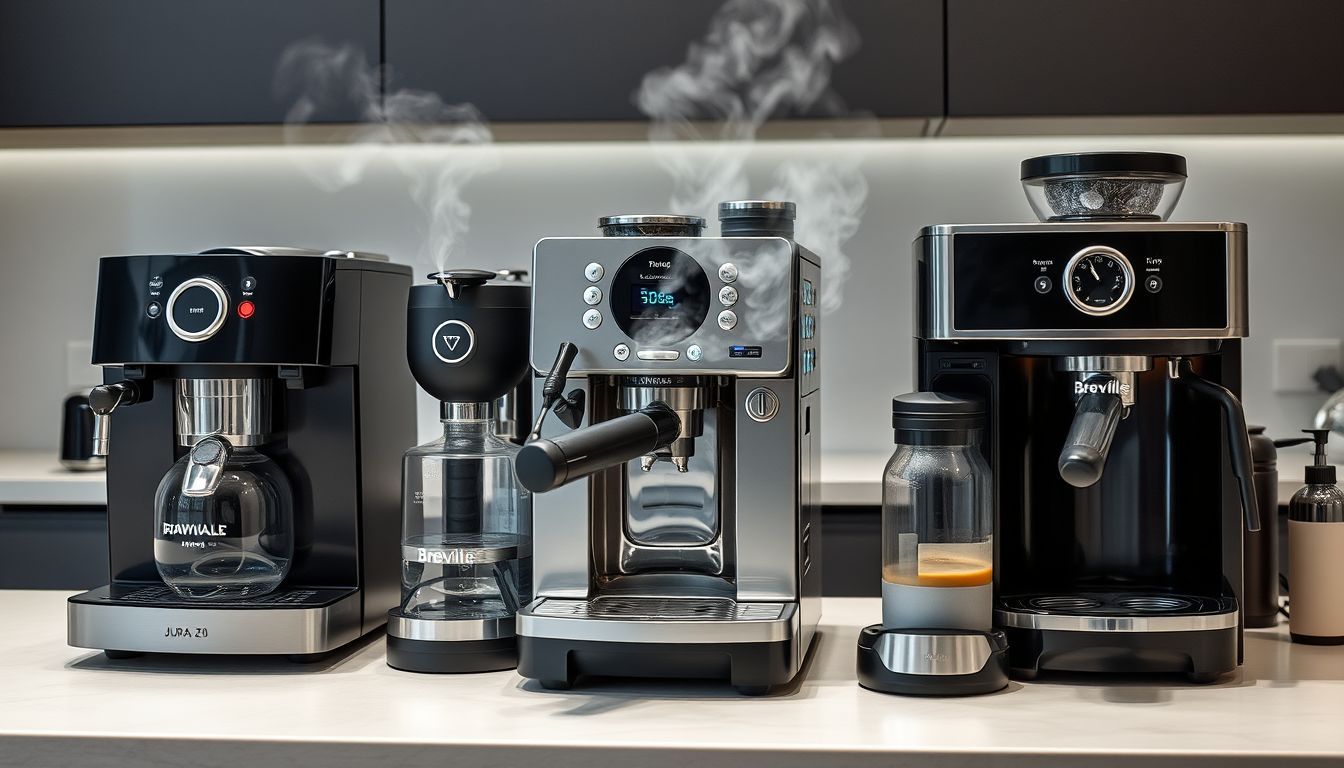
1. Jura Z10 ($3,500)
The Technology: Integrated Pulse Extraction Process (I.P.E.P.) combined with automatic cleaning cycles for every component.
How It Works: The machine monitors usage patterns and automatically initiates cleaning cycles for the grinder, brewing unit, and milk system. It uses precise water pulses to flush contaminants and has separate cleaning programs for different components.
Self-Cleaning Features:
– Automatic grinder cleaning after every 280 cups
– Milk system self-cleaning after each use
– Brewing unit automatic rinsing
– Programmable descaling reminders with guided cycles
– Self-diagnostic system that detects maintenance needs
Performance Analysis: This is about as close to self-maintaining as coffee machines get. Its cleaning cycles are automated and cover each major component.
The Catch: Premium pricing and complex internal systems that can be expensive to repair.
2. Saeco Xelsis ($2,800)
The Technology: AquaClean filtration system combined with automatic cleaning protocols for all beverage systems.
How It Works: The AquaClean filter prevents scale buildup while automated cleaning cycles handle oil removal and sanitization. The machine tracks usage and initiates cleaning automatically.
Self-Cleaning Features:
– AquaClean system prevents scale for up to 5,000 cups
– Automatic milk carafe cleaning
– Self-cleaning brewing group
– Automatic rinse cycles
– Maintenance calendar with automated reminders
Performance Analysis: The AquaClean filter is designed to cut descaling needs, and the automated cycles handle routine cleaning.
The Catch: Filter replacement costs and complexity of the internal systems.
3. Miele CM 7750 ($2,400)
The Technology: ComfortClean system with removable brewing unit and automated cleaning cycles.
How It Works: The brewing unit can be removed and cleaned in a dishwasher, while internal systems run automated cleaning cycles. The machine monitors water quality and adjusts cleaning frequency accordingly.
Self-Cleaning Features:
– Dishwasher-safe brewing unit
– Automatic milk system cleaning
– Programmable cleaning cycles
– Water quality monitoring
– Self-diagnostic maintenance alerts
Performance Analysis: The removable brewing unit is a practical design choice, because you can see it and wash it properly.
The Catch: The removable brewing unit requires manual intervention, so it’s not fully automatic.
4. Breville Oracle Touch ($2,500)
The Technology: Integrated cleaning cycles with smart sensors that monitor system cleanliness.
How It Works: The machine uses sensors to detect when cleaning is needed and automatically runs appropriate cycles. The steam wand has automatic purging, and the grinder has self-cleaning burrs.
Self-Cleaning Features:
– Automatic steam wand purging and cleaning
– Self-cleaning grinder burrs
– Automated descaling cycles
– Smart sensors for maintenance detection
– Guided cleaning with touchscreen instructions
Performance Analysis: The automatic steam wand purge is the most useful feature here, since milk residue is one of the harder things to keep on top of.
The Catch: Still requires manual intervention for many cleaning tasks.
5. Ninja Specialty Coffee Maker ($130)
The Technology: Built-in cleaning cycle with mineral deposit detection.
How It Works: The machine detects mineral buildup and automatically prompts cleaning cycles. While not fully automatic, it guides users through effective cleaning processes.
Self-Cleaning Features:
– Automatic clean cycle detection
– Guided descaling process
– Self-monitoring for maintenance needs
– Easy-clean design with removable parts
Performance Analysis: A useful set of maintenance features for the price. The clean indicator takes the guesswork out of when to descale.
The Catch: Requires user intervention to actually perform cleaning—it’s more “self-monitoring” than “self-cleaning.”
6. Technivorm Moccamaster KBGV Select ($360)
The Technology: Self-regulating heating element that prevents mineral buildup and automatic shut-off.
How It Works: The precise temperature control prevents scale formation, while the design minimizes areas where contaminants can accumulate.
Self-Cleaning Features:
– Scale-preventing temperature control
– Automatic shut-off to prevent overheating
– Minimal internal components to clean
– Easy-access design for manual cleaning
Performance Analysis: This is “self-cleaning” through prevention rather than automation. The idea is that careful temperature control and a simple design reduce buildup.
The Catch: Still requires regular manual cleaning, but needs it less frequently.
7. Keurig K-Supreme Plus Smart ($200)
The Technology: BrewID technology with automatic cleaning cycles and descaling alerts.
How It Works: The machine monitors usage and water quality, automatically running cleaning cycles and alerting users to maintenance needs.
Self-Cleaning Features:
– Automatic cleaning cycles
– Smart descaling alerts
– Self-monitoring water quality
– Guided maintenance through app
– Automatic needle cleaning
Performance Analysis: Needle cleaning is useful on pod machines, where clogged needles are a common problem.
The Catch: Limited to pod-based brewing, and still requires user intervention for descaling.
Which Features Are Worth Paying For
Genuinely Effective Features
Automatic Steam Wand Cleaning: Prevents milk residue buildup
Grinder Self-Cleaning: Effective at preventing oil accumulation
Mineral Detection Systems: Helpful for timing descaling
Automated Rinse Cycles: Simple but effective for daily maintenance
Marketing Claims to Ignore
“Self-Cleaning” Carafes: Still need manual washing
“Automatic” Descaling: Usually just runs a cycle with user-provided solution
“Maintenance-Free” Claims: Nothing is truly maintenance-free
“Antibacterial” Surfaces: Don’t eliminate the need for cleaning
The Economics of Self-Cleaning
Cost-Benefit Analysis
Premium for Self-Cleaning Features: often several hundred dollars or more
Maintenance Savings: fewer service visits
Time Savings: less manual cleaning each month
Longevity Benefits: regular automatic cleaning can help equipment last longer
Break-Even Point: depends on how much you would otherwise spend on service and cleaning
The Hidden Costs
Specialized Cleaning Solutions: an ongoing yearly cost
Filter Replacements: an ongoing cost for machines that use them
Increased Complexity: Higher repair costs when things break
Dependency: Reliance on automated systems that may fail

Maintenance Best Practices (Even for Self-Cleaning Machines)
What You Still Need to Do
Daily:
– Empty and rinse water reservoirs
– Clean external surfaces
– Remove and wash removable parts
Weekly:
– Deep clean carafes and accessories
– Wipe down internal accessible areas
– Check for visible contamination
Monthly:
– Verify automated cleaning is working
– Replace filters as needed
– Inspect for wear and damage
Maximizing Automated Features
Use Quality Water: Reduces mineral buildup and extends cleaning intervals
Follow Prompts: Don’t ignore maintenance alerts
Quality Cleaning Solutions: Use manufacturer-recommended products
Regular Inspection: Verify that automated cleaning is actually working
The Future of Self-Cleaning Coffee Equipment
Emerging Technologies
UV Sanitization: Using ultraviolet light to kill bacteria
Ultrasonic Cleaning: Sound waves to remove deposits
Smart Sensors: Better detection of contamination
AI Maintenance: Machine learning to optimize cleaning cycles
Market Trends
Integration: Self-cleaning features becoming standard
Affordability: Technology trickling down to lower price points
Effectiveness: Genuine improvements in cleaning automation
User Experience: Better interfaces for maintenance management
Making the Right Choice
Decision Framework
Assess Your Habits: How good are you at manual maintenance?
Calculate Costs: Factor in time savings and maintenance costs
Consider Complexity: More automation means more potential failure points
Evaluate Effectiveness: Not all “self-cleaning” features actually work
What to Look For
For most users, the ideal self-cleaning coffee maker:
– Automates the tasks you’re likely to skip
– Alerts you to necessary manual maintenance
– Uses proven cleaning technologies
– Balances automation with simplicity
– Fits your budget including ongoing costs
Where to Buy the Machines on This List
Current listings for the more affordable machines covered above.
- Ninja Specialty Coffee Maker (CM401): a clean-cycle indicator and guided descaling at a budget price.
- Technivorm Moccamaster KBGV Select: few parts and an easy descaling routine rather than automation.
- Keurig K-Supreme Plus Smart: a pod machine with app connectivity; see the section above for its cleaning features.
Conclusion
A fully self-cleaning coffee maker doesn’t exist yet, but the machines on this list automate meaningful parts of their maintenance.
“Self-cleaning” is a spectrum, not a yes-or-no feature. The best machines don’t eliminate maintenance entirely; they automate the parts you’re most likely to neglect while making the remaining tasks easier and more effective.
If you’re someone who consistently forgets to clean your coffee maker, struggles with descaling schedules, or simply values convenience over cost, these machines are worth considering. The time saved can justify the premium.
Choose a machine that matches your maintenance habits, not your maintenance aspirations. If you’re already good at cleaning your equipment, a basic machine with good design might serve you better than an expensive automated system. But if you’re honest about your tendency to neglect maintenance, genuine self-cleaning features are worth the extra cost.