Pour hot water into a dry paper filter and a pale, papery smell rises up, like a fresh cardboard box left in the rain. Brew a delicate washed Ethiopian (think jasmine and lemon peel) through it and the cup can taste muted, a little dull around the edges.

The reason is that paper has its own aromas, interacts with water and changes how your brew flows. Sometimes rinsing the filter helps.
Sometimes it’s just an extra step. Here’s how to tell the difference.
What Rinsing the Filter Does
Rinsing isn’t a single benefit—it’s three separate mechanisms happening at once: removing paper volatiles, preheating your brewer, and seating the filter so flow is more predictable.
If you’re going to spend the effort, you should know which of those you’re actually buying.
1) It can reduce papery flavors and aromas
Most paper filters are made from wood pulp. Even when they’re well-manufactured, they can carry trace paper aromas—think “new notebook,” “cardboard,” or “brown bag.” Hot water volatilizes those compounds fast, which is why you smell them most during the rinse.
Will you always taste them? Not always. A chocolatey natural Brazil brewed at 1:15 can cover faint paper notes. But a delicate washed Ethiopia from a roaster like Tim Wendelboe—bergamot, white peach, tea-like body—gives those papery edges nowhere to hide.
Takeaway: If your coffee is light-roast, floral, or tea-like (washed Ethiopia, washed Kenya, some high-elevation Colombias), rinsing is more likely to matter. If you’re brewing darker, heavier coffees (classic espresso roasts, chocolaty naturals), it’s less critical.
2) It preheats the brewer and server (this is often the bigger deal)
A room-temperature ceramic dripper or thick glass carafe is a heat sink. If your slurry drops a few degrees early in the brew, extraction changes: acidity can get sharp, sweetness can flatten, and the body can thin out.
For pourover, a useful target is to start with brew water around 93–96°C (199–205°F) depending on roast level, and keep the slurry from crashing early. Preheating with rinse water is the simplest way to reduce that thermal hit.
Takeaway: If you’re brewing into a cold Chemex or a cold Hario V60 server, rinse with 150–250 g of hot water to warm everything. Dump it right before brewing.
3) It seats the filter and reduces bypass quirks
A dry filter can sit with tiny gaps against the brewer wall. Water finds those gaps, races around the bed (“bypass”), and extraction becomes less even. A rinse helps the paper hug the cone.

This matters more on some brewers than others. On a Hario V60 02, small seating differences can change flow rate, especially if you’re grinding fine. On a Kalita Wave 185, the flat-bottom and wave shape already stabilize flow, so seating is less dramatic—but still real.
Takeaway: If your V60 drawdown times vary a lot with the same recipe, rinsing (and firmly seating) the filter is a cheap way to make them more consistent.
Can You Taste Paper in the Cup?
When paper taint shows up, it often presents as a slightly drying, woody edge—like chewing on a popsicle stick—especially in the finish. Aromatically, it can read as wet cardboard, brown paper bag, or a kind of dull “library book” smell.
The reason people argue about this is that it’s variable.
Why it depends on the filter brand and style
- Thick filters (like Chemex bonded filters): more material, more potential for paper aromatics, and they physically affect flow more. Rinsing tends to be more noticeable.
- Thin cone filters (some V60 papers): less mass, less paper character, but still enough that a very clean coffee can expose it.
- Unbleached vs bleached: Unbleached filters can have a stronger “paper mill” aroma. Modern bleached papers are generally quite neutral.
If you want a concrete experiment, brew a bright washed Ethiopian from a roaster like Onyx Coffee Lab or Counter Culture. Aim for a classic pourover recipe: 20 g coffee : 320 g water (1:16), medium-fine grind, total time 2:45–3:30 on a V60.
Do two cups side-by-side: one with a dry filter, one with a rinsed filter. Smell the crust as it cools. Pay attention to the finish. If there’s paper, you’ll often catch it more clearly once the cup drops below about 60°C (140°F), when aromas and sweetness are easier to pick out.
Takeaway: If you’re unsure whether this is real or placebo, do the side-by-side test once with a delicate coffee and a consistent recipe. Your own palate is the best judge.
How Rinsing Affects Temperature and Flow
Rinsing also changes the temperature of your equipment and how water flows through the filter.
Preheating: small temperature changes, noticeable effects
If you brew with 96°C water into a cold dripper and server, the first pour can lose heat quickly. That early phase matters because it’s when acids and aromatics extract rapidly. If the slurry is cooler than intended, you can end up with a cup that feels sharp up front but oddly hollow in the middle—like the citrus is loud, but the honey sweetness never shows.
A rinse preheats your equipment and helps you start closer to your intended brewing conditions.
Takeaway: Use the rinse to preheat the server too, not just the filter. Rinse until the carafe is warm to the touch (usually 150–250 g of near-boiling water), then dump.
Seating and flow: why your drawdown time might change
A rinsed filter swells and adheres. That can slightly reduce bypass and make flow more consistent. Consistency matters because extraction is time + contact + concentration.
If you track your brews, you’ll often see drawdown stabilize when you rinse coffee filters. On a V60, a wide swing in drawdown times can narrow once the paper is properly seated and the dripper is preheated.
If you measure, here’s a useful benchmark: for a 1:16 V60 brew, many people land in the neighborhood of 1.30–1.45% TDS with 18–22% extraction yield, depending on grinder, pouring, and coffee. Rinsing won’t fix extraction on its own, but it can reduce one source of variability so your adjustments (grind size, agitation, water temp) actually mean something.
Takeaway: If you’re chasing consistency, rinse, then keep everything else the same for 3 brews. If your brew times tighten up, you just removed a variable.
How to Rinse Filters Correctly (V60, Kalita, Chemex, and Batch Brewers)
If you rinse, wet the whole filter. A partial rinse takes nearly the same effort and can still leave paper flavors.
Hario V60 (cone) rinse method
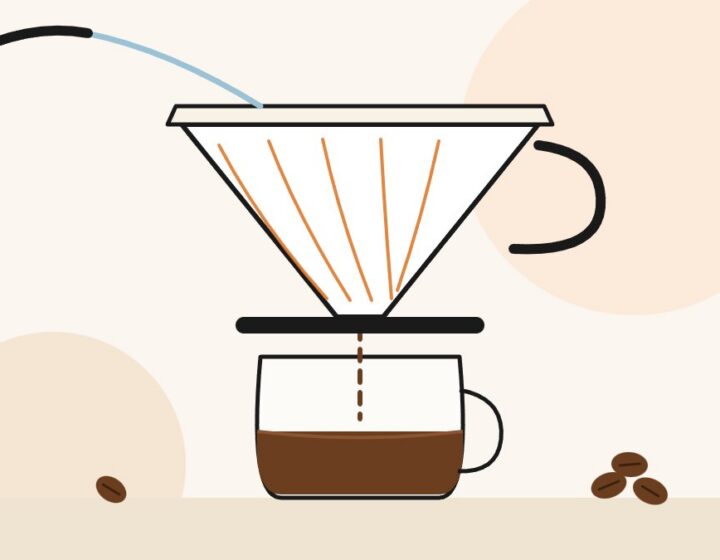
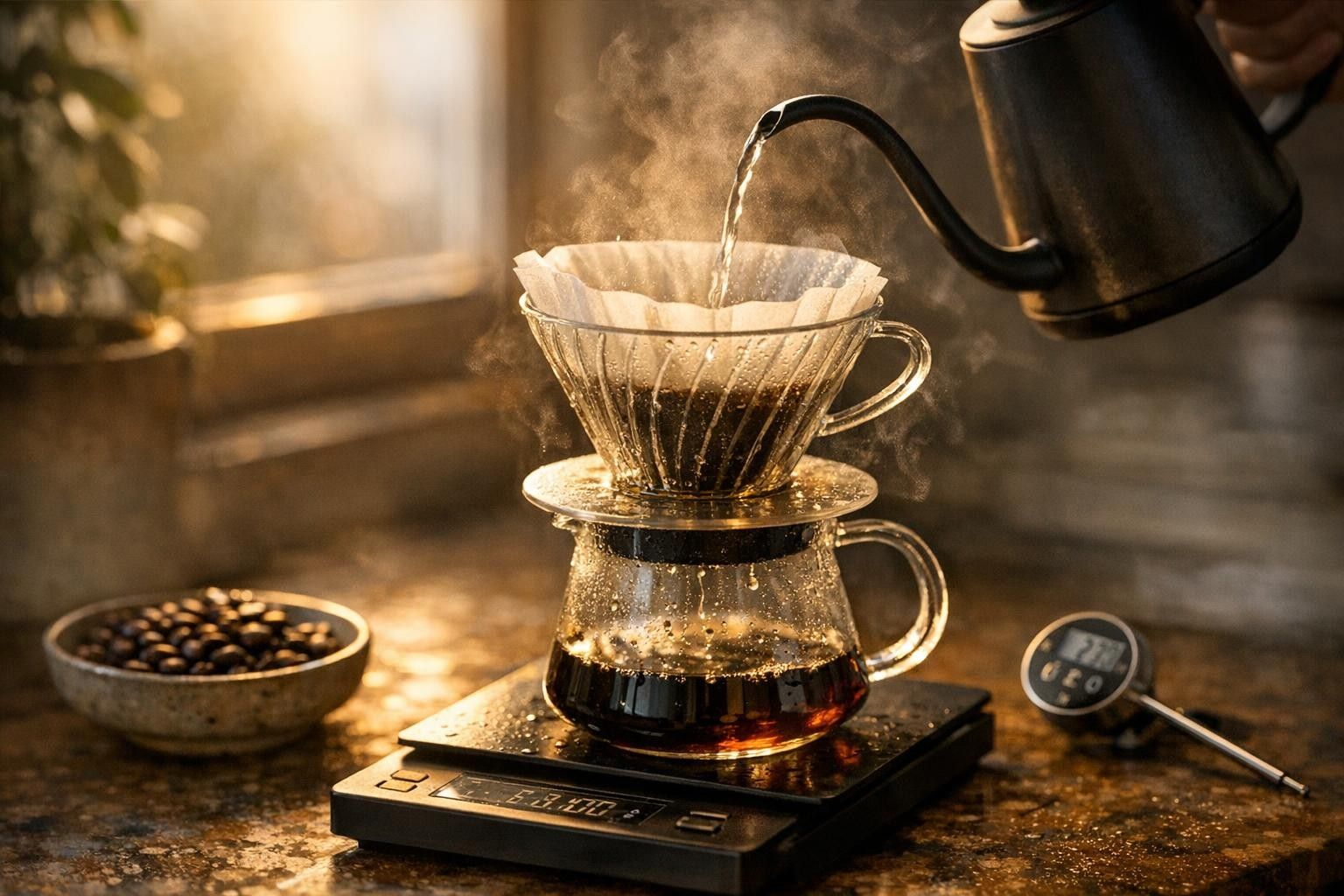
- Place the filter, then pour 100–200 g of hot water (93–96°C) in a slow spiral, making sure you wet every section of paper.
- Let it drain fully (usually 10–20 seconds).
- Dump the rinse water from the server. Then add coffee.
Aromatically, pay attention during the rinse: if you smell that wet-cardboard note strongly, you’ve just learned your filter benefits from rinsing.
Takeaway: After rinsing, give the V60 a gentle swirl to ensure the filter is fully seated and there are no folds creating channels.
Kalita Wave 185 (flat bottom) rinse method
Wave filters can trap dry pockets in the pleats.
Rinse with 120–200 g of hot water, aiming into the pleats. Make sure the filter is evenly stuck to the bottom and sides so the bed sits flat.
Takeaway: If your Kalita is stalling, rinsing won’t fix it alone—but it removes one culprit (poor seating) before you start blaming your grind.
Chemex rinse method
Chemex bonded filters are thick, so rinse them thoroughly.
Use 250–400 g of hot water, making sure the triple-fold side is fully saturated. Then dump the water carefully—you want the filter to stay seated.
This is where you often notice the biggest sensory change: unrinsed Chemex can add a papery dryness that turns a silky Colombia into something flatter, more like cocoa powder than melted chocolate.
Takeaway: If you brew Chemex and think it tastes “clean but thin,” try a hotter brew (up to 96°C) plus a thorough rinse and preheat. You might regain sweetness and body without changing the coffee.
Batch brewers (Moccamaster, Ratio Six) rinse shortcut
If you’re using a Technivorm Moccamaster, you can rinse the filter in the basket with hot water from the kettle or the machine’s first drip cycle—then discard before brewing.
Takeaway: If rinsing feels annoying for batch brew, prioritize preheating the thermal carafe (if you have one). A cold carafe can steal heat and make the cup feel dull even when extraction is fine.
When You Can Skip Rinsing (and When You Shouldn’t)
You don’t need to rinse every paper filter. Rinse when it changes something you care about.
You can often skip rinsing when
- You’re using high-quality, low-odor filters (many modern cone papers).
- You’re brewing a heavier coffee where paper notes get buried (think a syrupy natural Brazil or a medium-dark blend).
- You’re making milk drinks where the cup’s subtle aromatics won’t be the headline.
If you skip, compensate elsewhere: preheat the brewer with hot tap water, or simply run a small amount of kettle water through the brewer into the sink.
You should strongly consider rinsing when
- You’re using Chemex filters or any noticeably thick paper.
- You smell papery aromas during the first pour.
- You’re brewing delicate, high-acidity coffees (washed Ethiopia, Kenya AA, some Geshas) where clarity matters.
- You’re chasing repeatability and dialing in grind size and pour structure.
A good rule of thumb: if the coffee is special (say a honey-processed Costa Rica from a roaster like Sey Coffee), rinse. You want that cup to taste like ripe stone fruit and cane sugar, not like the inside of a shipping box.
Takeaway: Make rinsing conditional: default to rinsing for “fancy beans” and thick filters; skip when convenience matters and the coffee style is forgiving.
Conclusion: Treat Rinsing as a Variable
Rinsing your paper filter is one more variable you can control.
When it works, it works in three ways at once: it strips away papery aromatics, it warms your brewing system so extraction starts where you think it does, and it makes flow more consistent so your recipe behaves. When it doesn’t make a difference, you can skip it.
Try this: tomorrow, brew the same coffee twice—same 1:16 ratio, same grinder setting, same 93–96°C water. Rinse one filter thoroughly and leave the other dry. Then taste both as they cool.
If you can’t tell a difference, you can drop the step. If you can, rinsing is an easy improvement.