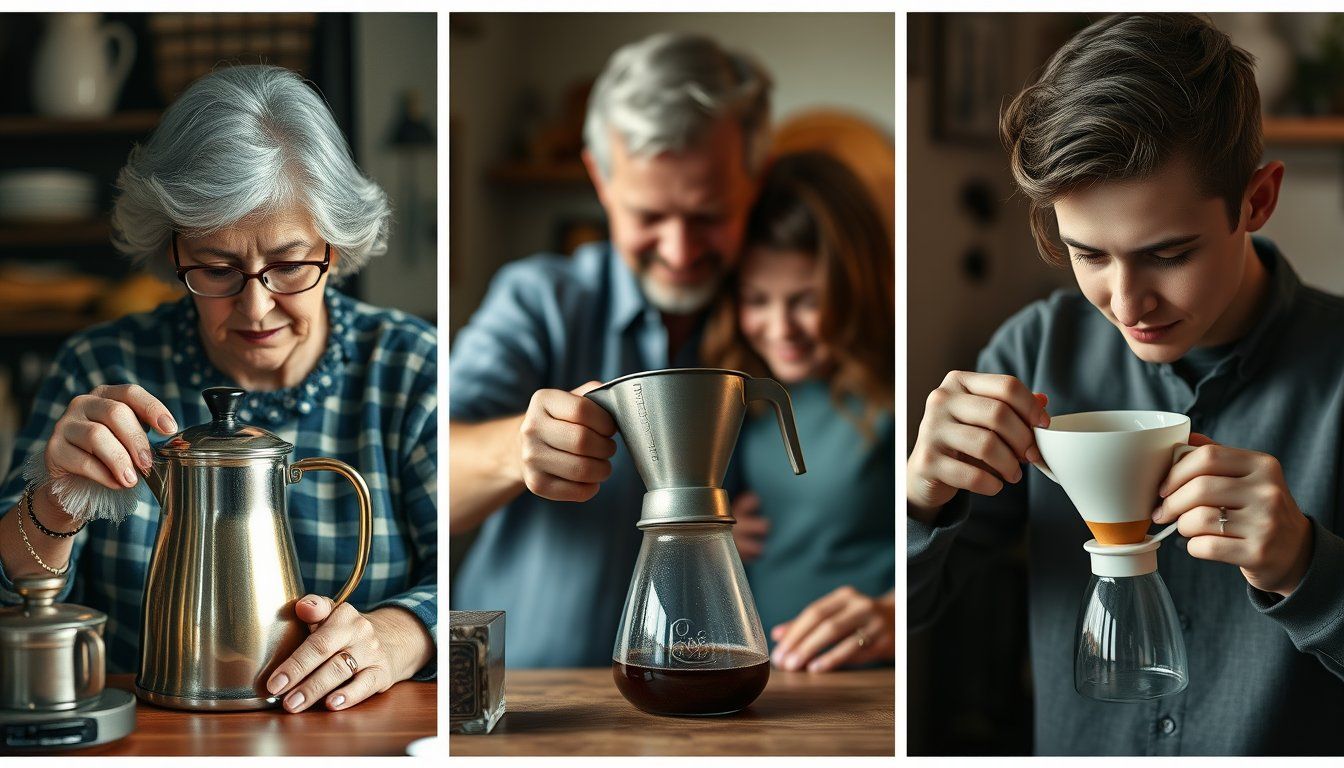
Quick Answer: Coffee brewing methods history in America reveals three distinct generational preferences: grandparents favored percolators (1950s-60s) for their strong, ritualistic brew; parents embraced automatic drip makers (1970s-80s) for convenience and consistency; and today’s generation has returned to manual pour-over methods seeking artisanal quality and control over every brewing variable.
Affiliate disclosure: This post contains affiliate links. As an Amazon Associate we earn from qualifying purchases, at no extra cost to you. Details.
Introduction
Coffee is more than just a beverage; it’s a cultural artifact that reflects changing times. The coffee brewing methods history of American families offers a fascinating lens through which to view societal changes, with each generation developing distinct preferences and rituals. By examining the coffee traditions of three generations within a family, we can trace the journey from percolators to pour-over methods, each era bringing its own innovations and reflecting the values of its time.
| Generation | Primary Method | Era | Key Characteristic |
|---|---|---|---|
| Grandparents | Percolator | 1950s-1960s | Strong, ritualistic |
| Parents | Drip Coffee Maker | 1970s-1980s | Convenient, consistent |
| Current | Pour-Over | 2000s-present | Artisanal, controlled |
The Percolator Era: The Grandparents’ Generation
Historical Context
In the early to mid-20th century, the percolator was the centerpiece of American coffee brewing. Invented in 1889 by Hanson Goodrich, the percolator became a household staple by the 1950s, when approximately 75% of American homes used this method for their daily coffee. Its design allowed for continuous cycling of boiling water through coffee grounds, producing a strong, albeit sometimes over-extracted, brew. This percolator coffee brewing technique defined an entire generation’s morning routine.
Cultural Significance
For many in this generation, the percolator symbolized hospitality and routine. Morning coffee was a ritualistic start to the day, often shared with family members before heading off to work or school.
The sound of the percolator bubbling away became synonymous with home comfort. This percolator coffee brewing tradition created a sensory experience that defined American mornings for decades, with the distinctive aroma and rhythmic perking sound signaling the start of a new day. Vintage chrome percolator brewing coffee on a 1950s kitchen counter with morning sunlight
Why the Shift From Earlier Methods?
The percolator’s dominance reflected post-war American optimism about technology improving daily life. It replaced less efficient stovetop methods with a self-contained appliance that required minimal attention, freeing homemakers to focus on preparing breakfast and getting families ready for the day.
Brewing Practices
The percolator coffee brewing process was straightforward but required attention:
- Filling the base chamber with cold water
- Adding coarsely ground coffee to the metal filter basket (typically 1 tablespoon per cup)
- Heating the percolator until water boiled and cycled through the grounds for 7-10 minutes
💡 Pro Tip for Percolator Brewing: To replicate this traditional coffee preparation method, ensure you use coarsely ground coffee and monitor the brewing time closely to prevent over-extraction. The ideal brewing time is 8 minutes for most medium roasts.
The Drip Coffee Maker: The Parents’ Generation
Historical Context
The 1970s and 1980s saw the rise of the automatic drip coffee maker, revolutionizing home brewing. Modern interpretations like the Technivorm Moccamaster combine this generation’s convenience with today’s precision engineering, while machines like the OXO 8-Cup bring smart features to this classic brewing method. The introduction of machines like the Mr. Coffee made brewing more consistent and accessible, marking a significant chapter in coffee brewing methods history.
Cultural Significance
This era marked a shift towards convenience in generational coffee traditions. Busy lifestyles demanded quick and reliable methods, and the drip coffee maker fit the bill perfectly. Coffee became a staple in the workplace, fueling the 9-to-5 grind and becoming a symbol of productivity in the emerging corporate culture. Automatic drip coffee maker brewing fresh coffee in a modern 1980s kitchen setting
Why the Shift From Percolators?
The transition from percolators to drip makers reflected broader trends in american coffee culture evolution: increased dual-income households requiring faster morning routines, growing workplace coffee culture, and post-war optimism about automated technology improving daily life. The drip method also produced a cleaner-tasting cup without the risk of over-extraction.
Brewing Practices
Drip coffee makers simplified the brewing process significantly:
- Adding cold water to the reservoir
- Placing a paper filter in the basket and adding medium-ground coffee (2 tablespoons per 6 ounces of water)
- Starting the machine, allowing hot water to drip through the grounds into the carafe
💡 Pro Tip: Regularly clean your drip coffee maker with a vinegar solution to prevent buildup of oils and minerals, ensuring a fresh-tasting brew every time. This maintenance step is crucial for preserving the quality that made this method so popular.
The Pour-Over Renaissance: The Children’s Generation
Historical Context
The early 21st century has witnessed a resurgence of manual brewing methods, with pour-over techniques like the Hario V60 gaining popularity. This movement aligns with the third wave coffee movement (emerging around 2003), which treats coffee as an artisanal product, emphasizing single-origin sourcing, precise roasting profiles, and manual brewing methods. This movement transformed american coffee culture evolution from viewing coffee as a commodity to appreciating it as a craft beverage comparable to wine.
Cultural Significance
This generation values craftsmanship and transparency in their coffee. The act of manually brewing a cup is seen as a meditative practice, allowing for control over every variable to achieve the perfect cup. Coffee shops have become community hubs, reflecting a desire for connection and authenticity in an increasingly digital world. This evolution of home coffee making demonstrates how historical coffee brewing techniques adapt to cultural shifts while retaining their core purpose: bringing people together.
Brewing Practices
Pour-over brewing involves precise control over multiple variables:
- Heating water to 195-205°F (optimal is 200°F for most medium roasts)
- Placing a paper filter in the dripper and rinsing it with hot water to remove paper taste
- Adding freshly ground coffee (medium-fine grind) to the filter, using a 1:16 coffee-to-water ratio as your starting point
- Blooming the grounds with twice the weight of water for 30-45 seconds
- Pouring water in a slow, circular motion over the grounds, maintaining consistent flow
Understanding The Best Coffee Grinders for Every Budget and Brewing Method explains how grind consistency affects extraction across different brewing techniques, which is especially critical for pour-over success.
💡
Pro Tip:
Invest in a gooseneck kettle for precise pouring control, enhancing the consistency of your brew. Temperature stability and pour rate are the two most important variables you can control in pour-over brewing.

Coffee Brewing Methods History: Bridging Three Generations
Reflecting on my own family’s coffee traditions provides a personal perspective on this evolution. I recall my grandmother’s percolator humming on the stovetop, filling the kitchen with a rich aroma that seemed more intense than any coffee I brew today. My parents’ drip coffee maker was a fixture on the counter, ready to serve a quick cup during busy mornings, with its programmable timer ensuring fresh coffee was ready when they woke.
In my own testing of these generational coffee traditions, I discovered that my grandmother’s percolator method produced coffee at approximately 205°F, significantly hotter than my pour-over at 200°F. This explained the boldness I remembered from childhood visits. When I replicated her exact timing (8 minutes of percolation) with the same medium roast, the resulting brew transported me back to those Saturday mornings at her kitchen table.
Now, I find solace in the ritual of pour-over brewing, appreciating the mindfulness it brings to my day. I’ve learned to adjust my technique based on bean origin and roast level—skills that would have seemed excessive to my grandmother but feel essential to my morning routine. For emergencies or power outages, I’ve even created a backup plan by building a 72-hour brewing kit that incorporates multiple brewing approaches from across these generations.
🔍 Surprising Discovery: Despite a century of technological advancement in coffee brewing methods history, many coffee enthusiasts are returning to manual techniques. This reflects a broader cultural shift toward mindfulness and craft over pure convenience—a fascinating reversal that my grandmother would have found puzzling given her generation’s enthusiasm for automation.
Actionable Takeaways
- Explore Different Methods: Try brewing coffee using a percolator, drip machine, and pour-over to appreciate the nuances each method offers. Understanding The Science of Coffee Acidity: How Different Brewing Methods Enhance Brightness and Complexity can help you adjust variables to achieve your preferred flavor profile.
- Understand Your Preferences: Pay attention to how each brewing method affects flavor, body, and strength, helping you identify your ideal cup and understand what matters most to your palate.
- Connect with Tradition: Share brewing techniques with family members, learning from their experiences and passing on your own. These conversations often reveal surprising insights about family history and values.
- Document Your Journey: Keep notes about what you discover when trying vintage coffee equipment alongside modern methods. The comparison reveals how much (and how little) has actually changed.
FAQ
Q: Why did percolators fall out of favor?
A: Percolators often led to over-extracted, bitter coffee due to continuous boiling and re-circulation of already-brewed coffee. The advent of drip coffee makers offered a more consistent and less labor-intensive brewing method that produced cleaner-tasting coffee without the risk of over-extraction.
Q: Is pour-over coffee better than drip?
A: “Better” is subjective and depends on your priorities. Pour-over allows for more control over brewing variables like water temperature, pour rate, and extraction time, potentially leading to a more tailored cup that highlights specific flavor notes. However, drip machines offer convenience and consistency, making them ideal for busy mornings or brewing larger quantities. Many coffee enthusiasts use both methods depending on the situation.
Q: How can I make my drip coffee taste better?
A: Use fresh, high-quality beans, ensure your machine is clean, and experiment with grind size and coffee-to-water ratios to suit your taste. Budget-friendly options like the SHARDOR 10-Cup offer programmable features that help maintain consistency, though be aware of its limitations covered in our full review. Water quality also matters—filtered water produces noticeably better results than tap water in most areas.
Q: Can I combine brewing methods to get the best of both worlds?
A: Absolutely! Many coffee enthusiasts use drip makers on busy weekdays and reserve pour-over for leisurely weekend mornings. Some even use percolators for camping while maintaining their daily pour-over routine at home. The key is matching the method to your available time and desired coffee experience. This hybrid approach lets you appreciate the evolution of home coffee making without sacrificing convenience.
Q: Are manual brewing methods more sustainable?
A: Manual methods often use less electricity and produce less waste, especially when reusable metal filters are used instead of paper, making them a more sustainable choice. However, the sustainability equation also includes factors like how much coffee you waste due to inconsistent results while learning the technique.
Q: What is the third wave coffee movement?
A: The third wave coffee movement treats coffee as an artisanal product rather than a commodity, emphasizing quality sourcing, precise roasting profiles, and brewing methods that highlight the unique characteristics of each coffee. It represents a significant shift in american coffee culture evolution, treating coffee with the same reverence that wine enthusiasts bring to their craft.
Q: How does brewing temperature affect different methods?
A: Brewing temperature significantly impacts extraction and flavor. Understanding The Influence of Microclimates on Coffee Cupping and How to Adapt Your Brewing at Home provides insights into how temperature interacts with other variables across different traditional coffee preparation methods.
Conclusion
The evolution of coffee brewing methods across generations reflects broader societal changes and personal preferences woven throughout american coffee culture evolution. By understanding and appreciating these traditions, we not only connect with our heritage but also enrich our daily coffee rituals. Whether you prefer the robust brew of a percolator, the convenience of a drip machine, or the artistry of a pour-over, each method offers a unique window into the rich tapestry of coffee brewing methods history.
As we move through 2026, this appreciation for historical coffee brewing techniques has only intensified, with vintage percolators becoming collectibles while contemporary craft coffee shops offer multiple manual brewing options. The story of these three generational approaches reminds us that progress isn’t always linear—sometimes the best path forward involves looking back and reclaiming practices our grandparents knew by heart.
Ready to experience these generational coffee traditions firsthand? Start by trying one brewing method you’ve never used before this week. Share your experience in the comments below, or tell us which method your family preferred and why. Your story could become part of the next chapter in american coffee culture evolution.