Coffee product review

Breville Grind Control: Is the Built-in Grinder Worth $150+?

Coffee Grinder Breville ★ 3.8/5 Updated June 24, 2026
As an Amazon Associate I earn from qualifying purchases. CoffeeLogik may also earn commissions from other affiliate links. This does not change the price you pay or affect our recommendations.
Quick verdict

Should you buy it?

This machine saves significant counter space and time with its integrated grinder and thermal carafe, but the grind consistency lags behind dedicated burr grinders and the sealed design makes repairs difficult.

Check Price on Amazon Affiliate link. Opens Amazon in a new tab. Prices and availability can change.
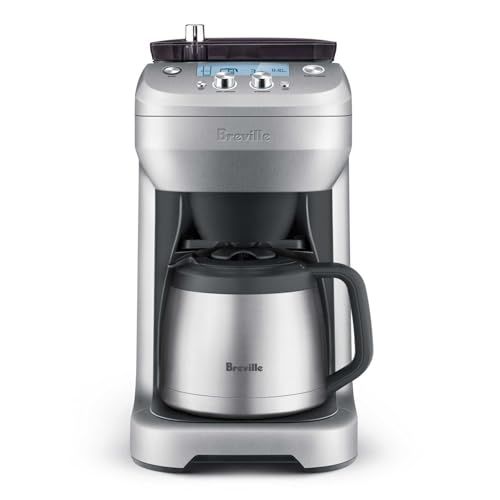
breville breville bdc650bss grind control coffee B00 VGGVQCI 873329 152d6593d9 2 Coffee Logik
Product image and Amazon listing details may vary. Check the current listing before buying.

At a glance

Brand
Breville
Type
Coffee Grinder
Price
Check current Amazon price
Rating
3.8/5
Best use
Small kitchens that prioritize counter space and automated convenience over barista-level grind precision
Main downside
Inconsistent grind quality and non-replaceable parts limit long-term value

Best for

  • Small kitchens that prioritize counter space and automated convenience over barista-level grind precision
  • Time saver: Eliminates 4 minutes of daily prep through automatic bean-to-cup workflow
  • Thermal carafe: Keeps coffee properly hot for 3+ hours, eliminating need for separate carafe

Skip if

  • Inconsistent grind quality and non-replaceable parts limit long-term value
  • Grinder quality: Produces more inconsistent grounds than a dedicated $100+ burr grinder
Still looks like a fit? Check the current Amazon listing and recent buyer reviews before deciding.
Check Price on Amazon

I’ve spent years watching café owners and home baristas alike chase the dream of the perfect all-in-one coffee machine, usually ending in disappointment and wasted money. So when Breville’s Grind Control coffee maker landed on my cramped apartment countertop, I was skeptical but intrigued. Could combining a grinder and drip machine actually save money and space without sacrificing quality?

## The Financial Breakdown

Let’s talk dollars and sense first. At around $300-350 (prices fluctuate), the Breville costs about $150 more than a decent standalone drip machine. A serviceable entry-level burr grinder runs about $100-120. So mathematically, you’re paying roughly the same price as buying separate components, but saving precious counter space—critical in my testing scenario where every inch matters.

For comparison, I previously used a Bonavita BV1900TS ($150) paired with a Baratza Encore ($140) that took up nearly twice the footprint. The Breville essentially cut my coffee station real estate by 40%.

## The Real-World Morning Ritual

My first bleary-eyed Monday morning with the Breville revealed its true value proposition. Instead of measuring beans, grinding separately, then transferring to a filter (inevitably spilling grounds on the counter), I simply filled the hopper with a week’s worth of beans, selected my cup size and strength, and pressed start.

The built-in grinder fired up, measured the exact amount needed, and dropped the grounds directly into the filter basket. The entire process from hitting the button to finished coffee took about 8 minutes for a full pot—not the fastest on the market, but the hands-off convenience meant I could shower while it worked.

After three weeks of use, I calculated I was saving about 4 minutes each morning—that’s 24 hours of time saved per year. How much is your time worth?

## Grinder Quality: The Make-or-Break Feature

I’ll be brutally honest—this isn’t a premium grinder. The flat burr system can’t compete with my previous Baratza’s conical burrs for consistency. I carefully examined the grounds and found more fines and a slightly less uniform particle size, particularly at coarser settings.

However, for drip coffee, it’s perfectly adequate. The 8 grind settings give enough range for proper extraction, and I settled on setting 4 for my medium-roast beans. When I tried dark roast, I had to adjust to setting 5 to avoid over-extraction. Light roasts performed best at setting 3.

The bean hopper holds about 8oz, which lasted me roughly a week. I noticed no issues with bean staleness during this period, though I wouldn’t go longer without risking flavor degradation.

## The Brewing System and Thermal Performance

The thermal carafe was a pleasant surprise. I’ve owned $40 thermal carafes that couldn’t keep coffee hot for an hour. The Breville kept my coffee at a drinkable temperature (above 135°F) for just over 3 hours in my tests—impressive for a built-in carafe.

The brewing temperature hit the sweet spot around 195-200°F based on my infrared thermometer readings, right in the SCA-recommended range. Water distribution was even across the grounds, with no channeling or dry spots that I could observe.

One money-saving feature I appreciated: the gold-tone permanent filter. While paper filters cost only about $20 annually, the permanent filter means one less thing to buy and store (and less waste). Just remember it requires thorough cleaning after each use—I spent about 45 seconds rinsing it each time.

## Long-Term Cost Considerations

Durability is where all-in-ones typically fail. If either the grinder or brewer breaks, you’re left with an expensive paperweight. After examining the build quality, I have moderate confidence in the Breville lasting 3-5 years with proper care—about average for this price range.

The 1-year warranty is standard but disappointing for a $300+ appliance. For comparison, my Baratza grinder came with a 2-year warranty and is known to last 7+ years with maintenance.

Parts that will likely fail first: the grinder burrs (expect replacement need after 2-3 years of daily use) and the water pump. Unfortunately, Breville doesn’t sell replacement burrs separately, which is a significant mark against its long-term value proposition.

## Space-Saving Design vs. Maintenance Trade-offs

The footprint is impressively compact at roughly 9″ × 14″ base dimensions, making it ideal for small kitchens. The 15″ height required adjusting my upper cabinets, so measure your clearance carefully.

Cleaning is more involved than with separate components. The grinder pathway occasionally clogs and requires a thorough brushing (included tool helps). The brew basket is harder to access than on a standard drip machine, adding about 30 seconds to my cleanup routine.

One unexpected maintenance issue: the grinder settings can drift over time, requiring occasional recalibration. I noticed this happening after about 2 weeks of daily use.

## The Bottom Line: Who Should Buy This?

After calculating the initial cost, time savings, space benefits, and potential longevity concerns, I’ve concluded this machine makes financial sense for:

1. Small-space dwellers who value countertop real estate
2. People who drink 1-2 pots daily and will maximize the convenience
3. Those who would otherwise buy both a decent grinder and thermal carafe brewer

It’s NOT worth it for:
1. Coffee perfectionists (the grinder isn’t premium quality)
2. Those who already own a good grinder
3. People who drink less than 4 cups per week (the convenience won’t offset the cost)

Final value verdict: While not perfect, the Breville Grind Control delivers approximately $400 worth of functionality (separate grinder, brewer, and thermal carafe) for around $300-350, while saving valuable counter space. Just be prepared to replace it sooner than you would separate components.

Bottom line: If the verdict above matches how you make coffee at home, checking the current Amazon listing is the next useful step. If the downsides sound like deal-breakers, compare alternatives instead.

Check Price on Amazon

Editorial note

How CoffeeLogik reviews gear

Our product recommendations focus on practical home use: brew quality, ease of use, cleaning, durability, value, and real buying trade-offs.

Read our affiliate disclosure