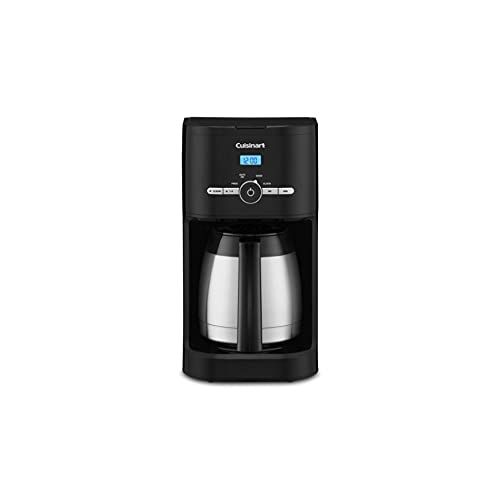
The Cuisinart 10-Cup Thermal Classic (DCC-1170BK) is a straightforward programmable drip machine built around a thermal, rather than glass-and-hotplate, carafe. Consumer Reports tested it, and the results are a useful reminder that “thermal” and “well-engineered” aren’t the same claim.
It doesn’t quite hit the temperature guideline
Consumer Reports’ testing found the unit “fell short of recommended guidelines of 195°F or more, maintained for five or six minutes.” That guideline — the range most extraction standards treat as the floor for full flavor development — is exactly what SCA-certified machines are built to hit, and this one didn’t. It doesn’t mean the coffee is undrinkable; it means water on the cooler side of optimal, which tends to produce flatter, less complete extraction than a machine that clears the bar.
The carafe is the second problem, not a workaround for the first
Consumer Reports also marked the carafe down specifically: an uncomfortable handle, dripping while pouring, balance problems when full, and difficulty emptying it cleanly. A thermal carafe’s whole selling point is holding heat without a hotplate cooking the coffee, so a carafe that’s hard to use undercuts the one thing this design is supposed to do well. Between the temperature shortfall and the carafe complaints, the “thermal” designation is doing less work here than it does on better-reviewed machines in the same category.
The features underneath are ordinary and fine
Cone-style filtration, auto-shutoff, a small-batch setting, a keep-warm function, drip stop, and an included water filter round out the spec sheet. Consumer Reports rated it “fairly convenient to use” based on how clear the controls are, how easy the reservoir is to fill, and how simple the filter basket and cleaning process are — none of that is a complaint, it’s just a machine that does the basics competently while falling short on the two things (temperature, carafe) it’s specifically marketed on. Measured capacity is 51oz, and the unit stands 15in tall on a 9in x 11in footprint.
The price is the argument for it
Listed from around $112, this sits well under machines like the Breville Precision Brewer or Café Specialty Drip that solve the same temperature and carafe problems more convincingly. If a thermal carafe at this price point is the priority and 195°F+ isn’t a strict requirement for you, it’s a reasonable buy. If temperature accuracy matters, this isn’t the machine that delivers it.
Before you buy
- Don’t buy this specifically for SCA-style brew temperature; independent testing measured it below the 195°F guideline.
- Practice pouring slowly and evenly; testers flagged dripping and balance issues with a full carafe.
- Confirm the carafe handle is comfortable for your grip before committing — it was a specific complaint in testing.
- Use the small-batch setting for anything under a full pot; it’s built in rather than an afterthought.
- Compare price against pricier certified machines if brew temperature is non-negotiable for you.
Test results and specifications from Consumer Reports’ review of the Cuisinart 10-Cup Thermal Classic (DCC-1170BK). CoffeeLogik has not tested this machine in person.