Short answer: No. You do not need a puck screen to pull good espresso. It is a helpful accessory, not a requirement, and most channeling problems are better solved by fixing puck prep—WDT, level tamping, and a clean shower screen—before adding one.
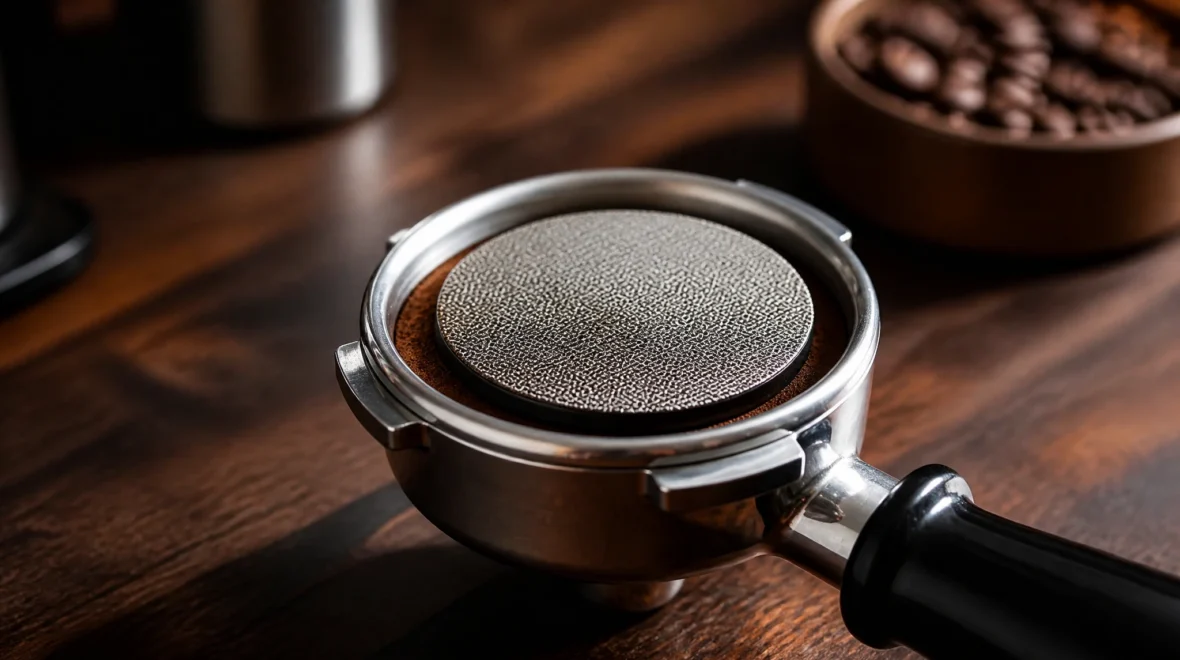
A puck screen is a thin stainless-steel mesh disc that sits on top of your tamped coffee puck, right below the machine’s shower screen. Its job is simple: it acts as a second diffuser, spreading incoming water more evenly across the coffee bed. The retailer Clive Coffee describes it as “a second shower screen” that “adds another layer of diffusion” to help water spread before it hits the puck. That is an accurate way to think about it.
Here is what puck screens do, when they help, and when your time and money are better spent elsewhere.
What a puck screen does
A puck screen sits on top of your coffee bed. When the machine’s shower screen sends water down, it hits the puck screen first, which disperses the flow into many smaller streams instead of a few concentrated jets. According to Clive Coffee, this “ensures water spreads evenly across the coffee bed” and “reinforces the integrity of the coffee bed” by slowing the initial water impact.
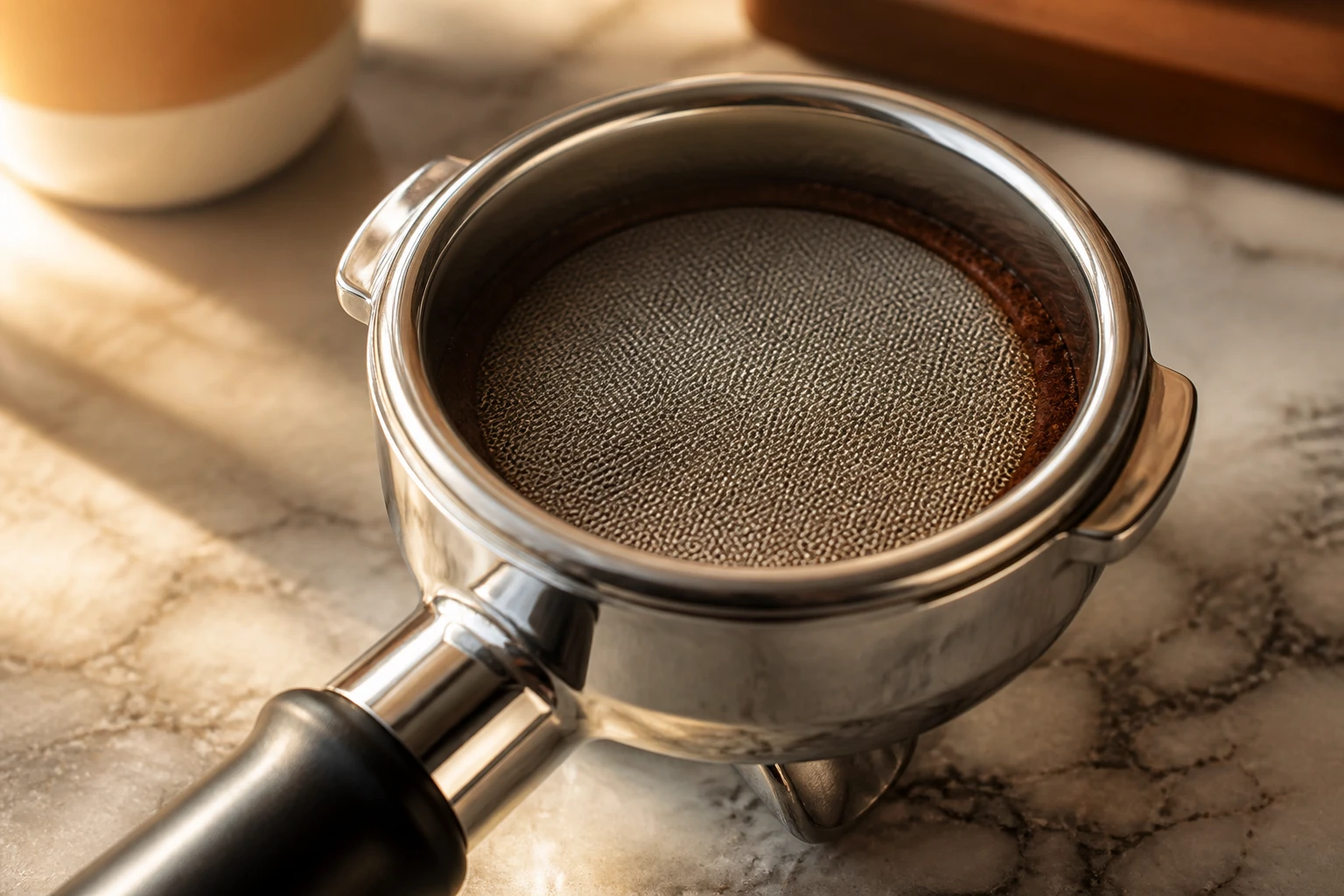
That is the primary mechanism: water diffusion. If your machine’s shower screen sends water down aggressively, or if your basket has wide, irregular holes, the puck screen can make the distribution more even. It does not change the coffee, the grind, or the tamp. It sits between the water and the puck and smooths out the entry.
The secondary benefit, mentioned by multiple sources including Clive and Latte Art Guide, is cleanliness. A puck screen catches stray grounds that would otherwise float up and stick to your shower screen or group head. On machines like the Gaggia Classic Pro or Rancilio Silvia, which can be enthusiastic with water delivery, that keeps your group head cleaner for longer. It does not reduce the need for periodic deep cleaning, but it does mean fewer stuck puck fragments on the shower screen after each shot.
When a puck screen helps
A puck screen is most useful when your machine has one of these characteristics:
- Aggressive shower screen flow: Machines with large holes in the shower screen or high-flow group heads benefit more because the puck screen adds the diffusion the shower screen is not providing.
- Inconsistent extractions despite good prep: If your distribution and tamp are solid but you still get occasional channeling or uneven blonding, the puck screen can be the final layer of insurance.
- Oily dark roasts: These leave more residue on the shower screen. A puck screen helps keep the group head cleaner, which matters more when you are pulling dark roast shots daily.
- Bottomless portafilter users who watch for channeling: If you use a bottomless portafilter and see spritzers or early blonding that you suspect comes from water-entry turbulence (not prep errors), a puck screen is a logical next step.
Clive Coffee’s testing found that their daily shots improved “immensely” after adding a puck screen to their existing puck prep routine. Latte Art Guide reported a similar experience: the shot without the puck screen tasted more bitter, while the shot with it was more balanced and less bitter.
But note: those reports also assumed good baseline prep. A puck screen is not a substitute for WDT, a level tamp, or a clean shower screen. If your puck prep is inconsistent, a puck screen will not fix it.
When a puck screen won’t help
A puck screen does almost nothing if your channeling comes from these sources:
- Uneven distribution: If your grounds are clumpy or unevenly spread in the basket, no puck screen will fix that. Water will find the weak spots regardless of how evenly it enters.
- Wrong grind size: Too coarse and water rushes through. Too fine and the puck fractures under pressure. The puck screen does not change grind dynamics.
- Tilted tamp: A tilted puck creates a permanent channeling path. A screen on top will not flatten it.
- A high-quality shower screen already in good shape: If your machine’s group head distributes water evenly and your shower screen is clean, the puck screen adds redundant diffusion. You will get the cleanliness benefit, but the flavor improvement may be negligible.
If any of the above applies, fix those first. The espresso channeling troubleshooting guide covers grind, distribution, tamp, basket, and shower screen—everything that matters more than a puck screen.
What about puck screens vs paper filters?
Puck screens and paper filters sit in different places and solve different problems. A puck screen goes on top of the puck and diffuses incoming water. A paper filter goes at the bottom of the basket and regulates exit flow, trapping fines for a cleaner cup. If you are choosing between them, the puck screen vs paper filter article has a detailed comparison that matches each tool to roast type, flavor goals, and machine characteristics.
Puck screens and related gear
If you decide to try one, match the screen to your basket size. For a direct comparison, see puck screen vs paper filter on espresso.
- 53.3 mm puck screen (2-pack): sized for 54 mm Breville portafilters.
- 58 mm espresso paper filters: the paper-filter alternative, for comparison.
- IMS precision filter basket (54 mm Breville): a precision basket, another way to improve extraction evenness.
The verdict
Do you need a puck screen? No. Good espresso comes from consistent puck prep, a clean shower screen, the right grind, and a reliable dose. A puck screen is a small, affordable accessory that can smooth out shot-to-shot variability and keep your machine cleaner—but it is a nice-to-have at best, not foundational.
If you already pull consistent shots with solid prep, skip it. If you are chasing that last bit of evenness on a machine with aggressive water flow, or you pull mostly dark roasts and want a cleaner group head, it is a reasonable purchase. At $10–$30 for a screen that lasts years, the financial risk is minimal. The time cost is one extra rinse after each shot.
CoffeeLogik did not test these products in person. This article is based on manufacturer descriptions and editorial analysis. The sources used in this article include Clive Coffee’s editorial testing at clivecoffee.com/blogs/learn/are-puck-screens-worth-it, and independent reviews from Latte Art Guide and LetsBrew.net.