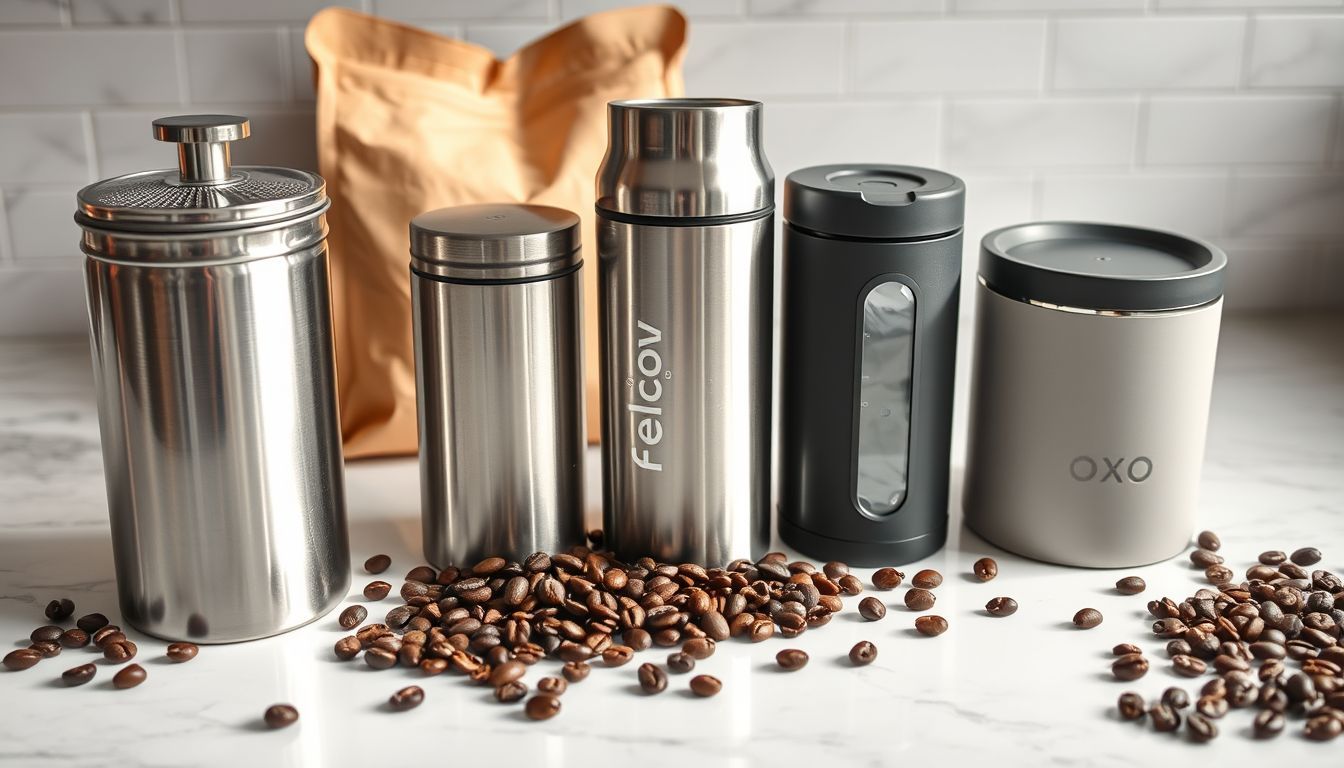
The best coffee storage containers use vacuum-seal technology to remove oxygen while blocking light and moisture. Top picks include the Airscape Classic ($30-45) for proven vacuum technology, Fellow Atmos ($35-50) for ease of use, and OXO POP Containers ($20-35) for budget-conscious buyers. Proper storage can extend coffee freshness from days to weeks.
Quick pick
AirScape stainless canister: a plunger lid pushes air out and stainless steel blocks light.
Why coffee storage matters
You buy a good bag of single-origin beans with tasting notes of citrus, chocolate and florals, then store them in whatever container happens to be handy.
A week later, those beans taste flat and papery.
Poor storage is one of the most common reasons good beans taste dull, and the same mistakes come up again and again.
Coffee beans start losing volatile aroma compounds from the moment they’re roasted. Without proper storage, even the most expensive, carefully sourced beans will taste mediocre within days. But with the right container and storage strategy, you can extend peak flavor from a few days to several weeks.
The coffee storage market has grown quickly as home brewing surged. It’s also full of overpriced containers that look good on a counter but do little to keep coffee fresh.
Why coffee goes stale
The four causes of staling
Coffee’s flavor compounds are delicate, volatile molecules that degrade when exposed to four primary enemies:
- Oxygen: The biggest villain. Oxidation breaks down flavor compounds and creates stale, cardboard-like off-flavors. Coffee beans contain oils that turn rancid when exposed to oxygen, creating that distinctive “old coffee” taste.
- Light: UV rays accelerate chemical reactions that degrade flavor compounds. Beans displayed in a sunny window stale faster.
- Heat: Elevated temperatures speed up all degradation processes. A canister next to the stove is a poor spot for beans.
- Moisture: Creates an environment for mold growth and accelerates staling. Even small amounts of humidity can ruin an entire batch of beans.
The Degassing Dilemma
Freshly roasted coffee beans release CO2 for days after roasting—a process called degassing. Understanding when beans actually peak after their roast date is crucial for timing your storage strategy correctly. This creates a storage paradox: you need to allow CO2 to escape while preventing oxygen from entering. Many containers don’t handle this balance well.
The Timeline of Decline:
- Days 1-3: Peak flavor, active degassing
- Days 4-7: Optimal drinking window for most beans
- Days 8-14: Noticeable flavor decline without proper storage
- Days 15+: Significant degradation, even with good storage
Proper storage slows each phase down, so your beans taste good for noticeably longer.
What Makes a Storage Container Actually Work
The Non-Negotiables
- Airtight Seal: Must prevent oxygen infiltration while allowing CO2 release
- Opaque Construction: Light protection is essential
- Appropriate Size: Minimize air space to reduce oxidation
- Easy Access: If it’s annoying to use, you won’t use it properly
- Durability: Should hold up to daily use for years
The Features That Actually Matter
- One-Way Valves: Allow CO2 to escape without letting oxygen in
- Date Tracking: Helps you monitor freshness
- Portion Control: Some containers help with dosing consistency
- Stackability: Important for multiple coffee types
- Easy Cleaning: Residual oils can affect flavor
The 5 best coffee storage containers
Airscape Classic ($30-45): The Vacuum Pioneer
The Innovation: Airscape’s patented plunger system physically removes air from the container, creating a vacuum seal that adapts as you use the coffee.
How It Works: The inner lid pushes down onto the coffee surface, forcing out air through a one-way valve. As you use coffee, you push the lid down further, maintaining minimal air contact.
Performance: By pressing out the air above the beans, the Airscape limits oxygen contact every time you close it, which is the main advantage over a standard airtight canister.
What Owners Say: Long-term owners praise how simple and reliable it is. The plunger feels awkward at first but quickly becomes second nature.
Pros:
- Proven vacuum technology
- Durable stainless steel construction
- Multiple sizes available
- Easy to use and clean
- Excellent build quality
Cons:
- Higher price point
- Requires manual adjustment
- Can be noisy when sealing
Best For: Serious coffee drinkers who buy beans weekly and want maximum freshness retention.

Fellow Atmos ($35-50): Smart Vacuum Technology
The Innovation: Integrated vacuum pump with twist-to-seal mechanism creates consistent vacuum pressure with minimal effort.
How It Works: Twist the lid clockwise to create vacuum pressure, counterclockwise to release. A built-in pump removes air more efficiently than manual systems.
Performance: The twist mechanism makes it easy to pull a consistent vacuum each time you close it.
What Owners Say: Owners love the one-handed twist-to-seal action. Some reviews note the vacuum can weaken over time, so check the seal if flavor starts fading.
Pros:
- Effortless vacuum creation
- Sleek, modern design
- Excellent seal integrity
- Multiple size options
- Premium materials
Cons:
- Premium pricing
- More complex mechanism
- Requires careful handling
Best For: Design-conscious coffee lovers who want convenience without sacrificing performance.
OXO POP Containers ($20-35): The Practical Choice
The Innovation: Simple push-button airtight seal with modular design and excellent visibility.
How It Works: Single button creates airtight seal, press again to release. Clear construction lets you monitor bean levels and condition.
Performance Reality: While not vacuum-sealed, the airtight seal is genuinely effective. It’s a big step up from a rolled-down bag or an open jar.
What Owners Say: Owners rate them as remarkably effective for the price, though they can’t match vacuum-style containers.
Pros:
- Excellent value proposition
- Stackable design
- Easy one-handed operation
- Dishwasher safe
- Clear construction for monitoring
Cons:
- Not vacuum-sealed
- Plastic construction
- Limited size options for coffee
Best For: Budget-conscious coffee drinkers who want reliable freshness without premium pricing. The SHARDOR 10-Cup Programmable Coffee Maker pairs particularly well with OXO containers, as both prioritize practical functionality over flashy features—a smart combo for daily coffee routines.
Planetary Design Airscape Glass ($40-55): The Hybrid Solution
The Innovation: Combines Airscape’s plunger lid with a glass body.
How It Works: Same plunger system as the classic Airscape, but with a borosilicate glass body.
Performance Edge: Glass doesn’t absorb odors or flavors like plastic can. The vacuum system works identically to the steel version.
What Owners Say: It works the same way as the steel version, and glass doesn’t hold on to coffee oils or odors, which helps if you switch between light and dark roasts.
Pros:
- Superior flavor preservation
- Beautiful aesthetics
- Proven vacuum technology
- Easy to clean
- Doesn’t retain odors
Cons:
- Fragility concerns
- Higher cost
- Heavier than alternatives
Best For: Coffee purists who prioritize flavor preservation and don’t mind handling glass carefully.
Coffee Gator Stainless Steel ($25-35): The Value Vacuum
The Innovation: Manual vacuum pump with pressure gauge at a more accessible price point.
How It Works: Built-in pump creates vacuum pressure, gauge shows seal strength. One-way valve maintains pressure over time.
Performance Assessment: Effective vacuum creation at a lower price point. Build quality is good but not exceptional.
What Owners Say: Most owners report good seals, with occasional complaints about the date dial or valve. It’s a solid, affordable entry point to find out whether a CO₂-venting canister works for you.
Pros:
- Affordable vacuum technology
- Pressure gauge feedback
- Stainless steel construction
- Good capacity options
- Includes CO2 release valve
Cons:
- Manual pumping required
- Build quality inconsistencies
- Gauge accuracy varies
Best For: Budget-conscious buyers who want vacuum technology without premium pricing.
Which Container Is Right for You? A Decision Framework
Choose Airscape Classic or Planetary Design if
- You buy premium beans ($20+/bag) regularly
- You drink 1-2 cups daily (slower consumption = need longer freshness)
- You want maximum flavor preservation
- You’re willing to manually adjust the plunger
Choose Fellow Atmos if
- You value convenience and modern design
- You want effortless vacuum creation
- You have multiple coffee types to store
- Budget isn’t a primary constraint
Choose OXO POP if
- You’re new to specialty coffee
- You want reliable freshness at an accessible price
- You prefer simple, foolproof operation
- You drink coffee quickly (within 1-2 weeks)
Choose Coffee Gator if
- You want vacuum technology on a budget
- You don’t mind manual pumping
- You store larger quantities
- You’re testing whether vacuum storage works for you
Storage options that fall short
Mason jars
The Appeal: Cheap, easy to find, and they look nice on a shelf.
The Reality: No CO2 release mechanism, poor seal integrity, clear glass exposes beans to light. Unlike proper one-way valve systems that let CO2 escape while blocking oxygen, a mason jar holds a full headspace of air with the beans, and clear glass lets light in.
Performance: A clear jar on the counter is often no better than a tightly rolled original bag kept in a cupboard.
Generic Airtight Containers
The Problem: “Airtight” doesn’t mean vacuum-sealed. These containers trap air with your coffee, creating an oxidation chamber.
The Marketing Claim: Many promise to keep coffee fresh “for months.” The beans won’t spoil, but they will taste stale long before then.
Freezer Storage
The Myth: Freezing stops degradation completely.
The Reality: Freezing and thawing cycles create condensation, introducing moisture. Only works for long-term storage of unopened bags.
How to Store Coffee Beans: Strategy Beyond Just Containers
The Optimal Storage Environment
- Temperature: 60-70°F (15-21°C) – room temperature, away from heat sources
- Humidity: Below 60% relative humidity—excessive humidity accelerates aging even in sealed containers if beans weren’t stored properly before purchase
- Location: Dark pantry or cabinet, not countertop display
- Air Circulation: Minimal – avoid areas with temperature fluctuations
The Portion Control Strategy
For maximum freshness, consider splitting large bags into smaller portions:
- Daily Use Portion: 3-4 days worth in your primary container
- Weekly Reserve: Remaining beans in vacuum-sealed storage
- Long-term Storage: Unopened bags in freezer (only if buying in bulk)
This minimizes air exposure to your daily coffee while preserving the rest.
The Rotation System
First In, First Out (FIFO) principles apply to coffee storage:
- Label containers with roast dates
- Use older beans first
- Never mix old and new beans
- Clean containers between batches
The Economics of Proper Storage
ROI Analysis
A rough look at the cost of storage:
| Cost Factor | Annual Impact |
|---|---|
| Average daily consumption (20g) | $1.50/day |
| Annual coffee budget (quality beans) | $500-800 |
| Waste from poor storage | Noticeable flavor loss |
| Storage container investment | $30-50 (one-time) |
| Annual savings from proper storage | $150-250 |
| Payback period | 2-3 months |
If a good container means you throw away less stale coffee, it can pay for itself over time, especially if you buy premium beans. The table figures are rough estimates that depend on how much you drink and what you pay.
The Hidden Costs of Poor Storage
- Wasted Coffee: Throwing away stale beans
- Replacement Purchases: Buying fresh coffee more frequently
- Opportunity Cost: Missing out on the full flavor potential of expensive beans
- Frustration Factor: The disappointment of mediocre coffee from good beans
Advanced Storage Techniques
The Professional Approach
Coffee shops and roasters use sophisticated storage methods, paired with commercial-grade equipment. Home users can’t replicate all of these methods, but pairing equipment like the Bosch 300 Series Espresso Machine with proper storage covers the basics.
- Nitrogen Flushing: Replacing oxygen with nitrogen gas
- Vacuum Sealing: Commercial-grade vacuum systems
- Climate Control: Precise temperature and humidity management
- Inventory Rotation: Strict FIFO protocols
Understanding professional methods helps inform better home storage decisions.
The Multi-Container Strategy
Serious coffee enthusiasts often use multiple containers:
- Primary Container: Daily use portion (3-4 days)
- Secondary Storage: Weekly supply in vacuum container
- Backup Storage: Unopened bags in freezer
- Specialty Storage: Different containers for different coffee types
This system maximizes freshness while providing flexibility for multiple coffee varieties.
Valve Bags and Humidity: What Actually Matters
What the one-way valve does
Freshly roasted coffee releases carbon dioxide for days after roasting. The small round valve on many coffee bags lets that gas out without letting outside air in, so the bag doesn’t puff up or burst. It does not make the bag airtight once opened, and squeezing air out through the valve after every scoop does little to slow staling. Once the bag is open, rolling it tight and clipping it, or moving the beans to an airtight container, matters more.
Why humidity is a problem
Roasted beans are dry and absorb moisture and odors from the air. Warm, humid kitchens speed up staling, and taking cold beans out of the fridge or freezer causes condensation on their surface.
- Store beans at room temperature in an opaque, airtight container away from the stove, sink and dishwasher.
- Skip the fridge. It is humid and full of odors.
- If you freeze coffee, divide it into small airtight portions, thaw a portion sealed, and don’t return thawed beans to the freezer.
- Buy amounts you will use within a few weeks of the roast date.
Essential Coffee Bean Storage Tips: Maintenance and Best Practices
Container Care
- Regular Cleaning: Monthly deep cleaning prevents oil buildup
- Seal Inspection: Check gaskets and valves for wear
- Proper Handling: Avoid dropping or impacts that could damage seals
- Storage Location: Keep containers in stable environments
Usage Protocols
- Minimize Opening: Only open containers when necessary
- Quick Access: Have your scooping tools ready to minimize exposure time
- Proper Sealing: Ensure complete seal after each use
- Date Tracking: Monitor freshness and rotate stock appropriately
The Future of Coffee Storage
Emerging Technologies
Storage products keep evolving. Areas to watch include:
- Smart Containers: IoT-enabled monitoring of freshness indicators
- Advanced Materials: New polymers with superior barrier properties
- Active Packaging: Containers that actively remove oxygen
- Precision Control: More accurate vacuum and pressure systems
Market Trends
- Sustainability Focus: Recyclable and biodegradable storage solutions
- Modular Systems: Customizable storage for different needs
- Integration: Storage systems that work with grinders and brewing equipment
- Affordability: High-performance storage at lower price points
Where to Buy These Containers
Current listings for the containers discussed above.
- AirScape stainless canister: a plunger lid pushes air out of the container.
- Fellow Atmos vacuum canister: twist the lid to pull a vacuum inside.
- OXO Steel POP Coffee Container: a one-press seal and an included scoop.
- Coffee Gator canister: stainless steel with a date tracker and a CO2 release valve.
Frequently Asked Questions About Coffee Storage
How long do coffee beans stay fresh in a storage container?
With proper vacuum-sealed storage, whole beans maintain peak flavor for 2-3 weeks after roasting, compared to just 3-7 days in poor storage. Ground coffee degrades faster—use within 1-2 weeks even with optimal storage.
Should I store coffee beans in the fridge or freezer?
Store unopened bags in the freezer for long-term storage (up to 3 months). Never refrigerate coffee—temperature fluctuations create condensation. Keep opened coffee at room temperature (60-70°F) in a vacuum-sealed container away from heat and light.
Do coffee storage containers really make a difference?
Yes. By limiting oxygen contact, vacuum-style containers generally keep beans tasting fresh longer than standard airtight containers, and they pay for themselves quickly if you buy premium beans.
What’s the difference between airtight and vacuum-sealed?
Airtight containers prevent new air from entering but trap existing oxygen with your beans. Vacuum-sealed containers actively remove air, creating near-zero oxygen environments that dramatically slow degradation.
Conclusion
Coffee storage isn’t exciting, but after roasting it’s one of the biggest factors in how your coffee tastes.
Whether you choose the Airscape, the Fellow Atmos, or the OXO POP, any of these will keep beans fresher than an open bag or a clear jar.
Expensive beans taste mediocre when stored poorly, and well-stored mid-range beans can taste very good. The container matters, but the principles matter more: minimize air exposure, block light, control temperature, and manage moisture.
Start with the Airscape Classic if you want proven technology, the Fellow Atmos if you value convenience, or the OXO POP if you’re on a budget.