Quick pick
Breville Bambino Plus: espresso and automatic milk steaming for café-style drinks.
The Short Answer
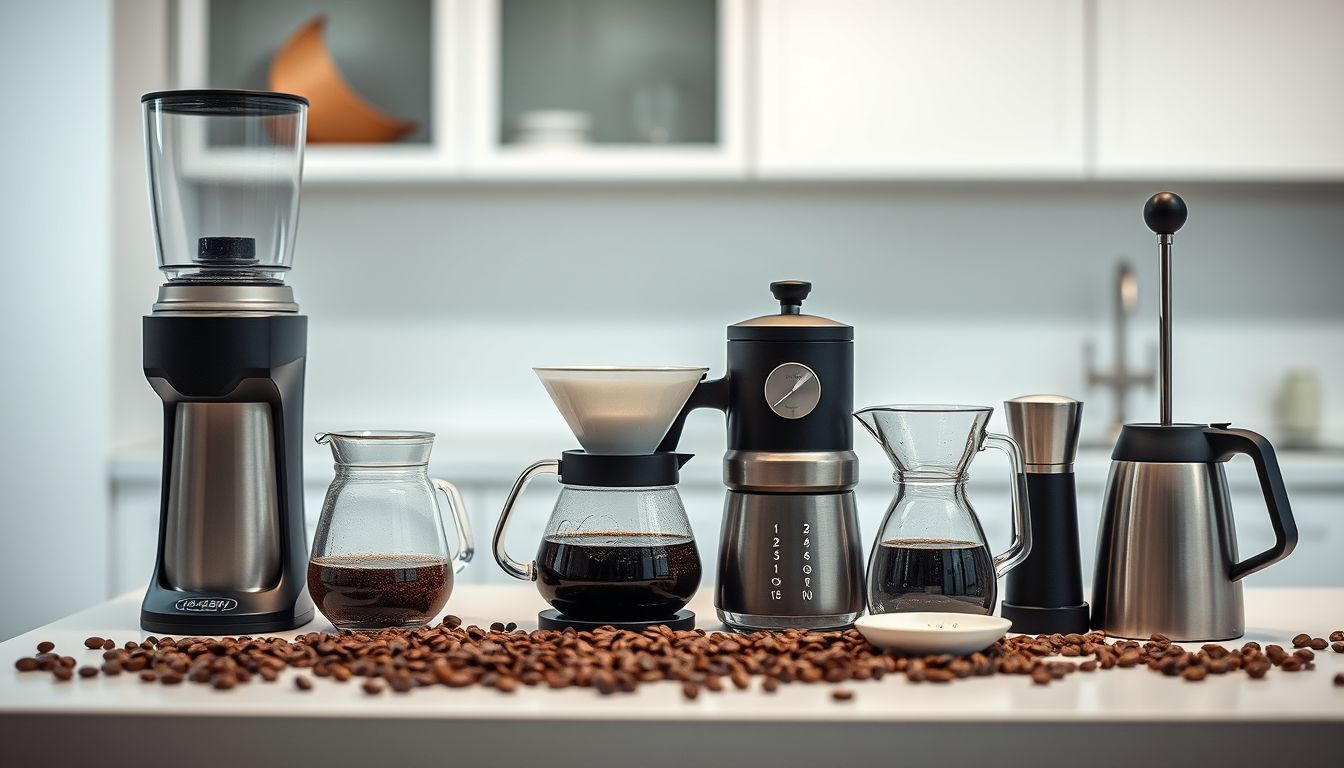
Making café-quality coffee at home requires three core pieces of home coffee equipment: a quality espresso machine with 9-bar pressure (starting at $300 for the Breville Bambino Plus), a burr grinder with stepless adjustment ($140-$900), and precision scales for consistent dosing. With this setup and some practice, you can make drinks that match a good coffee shop and spend less than you would on daily café visits.
Three days of cortados, flat whites and “signature lattes” can easily cost $40 or more, about the same as enough quality beans for a month of home brewing. The usual objection: “But I can’t make drinks like this at home.”
You can. This guide shows exactly which home coffee equipment delivers café-quality results, from $800 starter setups to $5,000+ professional systems. The recommendations are organized by budget and skill level.
Café-quality coffee at home depends more on understanding extraction than on spending thousands of dollars. Home equipment has improved a lot, and you don’t need a commercial setup to pull good shots.
Based on specs, independent reviews and owner feedback on machines from $200 starters to $4,000 prosumer setups, here is the home coffee equipment that delivers café-quality results.
What Café Quality Means
Before the equipment recommendations, it helps to define the target. Café quality comes down to a few things you can taste and see in the cup.
The Hallmarks of Professional Coffee
Espresso: Rich crema, balanced extraction, and a good balance of sweetness and intensity.
Milk texture: Silky microfoam that pours smoothly, holds latte art and improves the drink’s mouthfeel.
Consistency: The same good result every time, not just on lucky mornings.
Temperature: Drinks served hot but not lukewarm or scalding.
The Home Advantage
Home brewing has some advantages over commercial settings. You control every variable, from bean freshness to water quality, and you aren’t working through a morning rush on equipment that has been running since 5 AM. Done well, home drinks can match or beat what many cafés serve.
How to Choose the Right Home Coffee Equipment for Your Needs
Start by sorting out your priorities.
Budget
- Under $1,000: Focus on Breville Bambino Plus + quality grinder
- $1,500-$3,000: Dual boiler machines + professional grinder
- $3,000+: Prosumer equipment with pressure profiling
Drink Preferences
- Primarily espresso/americanos: Invest heavily in machine and grinder
- Milk-based drinks (lattes/cappuccinos): Prioritize steam power
- Mixed preferences: Consider dual equipment setup
Space Constraints
- Limited counter space: Compact machines (Bambino Plus)
- Dedicated coffee corner: Full-size prosumer equipment
- Minimal storage: All-in-one automatic machines
Skill Level
- Beginner: Automatic or semi-automatic with presets
- Intermediate: Semi-automatic with PID control
- Advanced: Manual control with pressure profiling
Essential Home Coffee Equipment Categories for Café-Quality Drinks
Espresso Machines
Entry Level: Breville Bambino Plus ($300)
The Bambino Plus is one of the best espresso machines for home use under $500. This compact machine delivers 9-bar espresso pressure and automatic milk frothing that produces café-quality microfoam.
What makes it special:
- 3-second heat-up time
- Automatic milk texturing with temperature control
- Compact footprint perfect for small kitchens
- Consistent extraction pressure
Real-world performance: It won’t satisfy every espresso enthusiast, but reviewers and owners consistently say it makes drinks on par with neighborhood coffee shops. The automatic milk steaming is a standout, and many beginners find it easier than a manual steam wand. For most home baristas, it is all the machine they need.
Check current pricing on the Breville Bambino Plus Espresso Machine BES500BSS .
Tip: For beginners, the Bambino Plus’s automatic frothing often produces better microfoam than a manual steam wand. Don’t skip it thinking manual is always better.
Mid-Range: Rancilio Silvia Pro X ($1,600)
This machine sits between beginner-friendly and professional. Dual boilers mean simultaneous brewing and steaming, while PID temperature control ensures extraction consistency.
Professional features:
- Dual boiler system for simultaneous operations
- PID temperature control (±1 °F accuracy)
- Commercial-grade group head
- Professional steam wand with excellent power
Why it stands out: The Silvia Pro X removes the wait between brewing and steaming that single-boiler machines require. Pull a shot, steam milk immediately, and serve drinks at optimal temperature.
Another option in this price range is the Bosch 300 Series Fully Automatic Espresso Machine, which offers one-touch drink preparation with built-in milk frothing. Purists may prefer manual control, but the Bosch is consistent and suits people who put convenience first.
Prosumer: Decent Espresso DE1+ ($3,500)
The Decent is one of the most advanced home espresso machines available, with tablet-controlled brewing, pressure profiling and data logging.
Advanced capabilities:
- Pressure profiling throughout extraction
- Real-time flow rate monitoring
- Temperature control to 0.1 °C
- Bluetooth connectivity and app control
Who it’s for: Serious enthusiasts who treat espresso as both a drink and an experiment.
Grinders
Quality home barista equipment starts with the grinder—arguably more important than the espresso machine itself.
Tip: If you can only upgrade one piece of equipment, upgrade your grinder first. A great grinder with a decent espresso machine usually outperforms an excellent machine with a poor grinder.
The Espresso Specialist: Eureka Mignon Specialita ($420)
Espresso demands grind consistency that many grinders can’t deliver. The Specialita’s 55 mm flat burrs and stepless adjustment make it the entry point for serious espresso grinding.
Technical advantages:
- Stepless micrometric adjustment
- Low retention design (minimal coffee waste)
- Quiet operation
- Consistent particle size distribution
Performance notes: The step up from a budget grinder is noticeable in the cup, especially for espresso.
The All-Rounder: Baratza Encore ESP ($140)
While primarily designed for filter coffee, the Encore’s 40 mm conical burrs and 40-position adjustment make it surprisingly capable for espresso with careful dialing in.
Versatility factors:
- 40 grind settings
- 40 mm conical burrs for consistent particle size
- Easy-to-access burrs for cleaning
- Compact footprint perfect for tight spaces
For a budget-friendly, reliable grinder that can grow with your skills, check out the Baratza Encore Coffee Grinder ZCG495BLK.
High End: Mahlkönig X54 ($900)
When you want to remove grind quality as a variable, the X54 offers commercial-grade consistency in a home-friendly package.
Professional features:
- 54 mm flat burrs
- Exceptional grind uniformity
- Low retention and easy cleaning
- Durable, long-lasting build
Filter Coffee Excellence: An Alternative Path to Café Quality
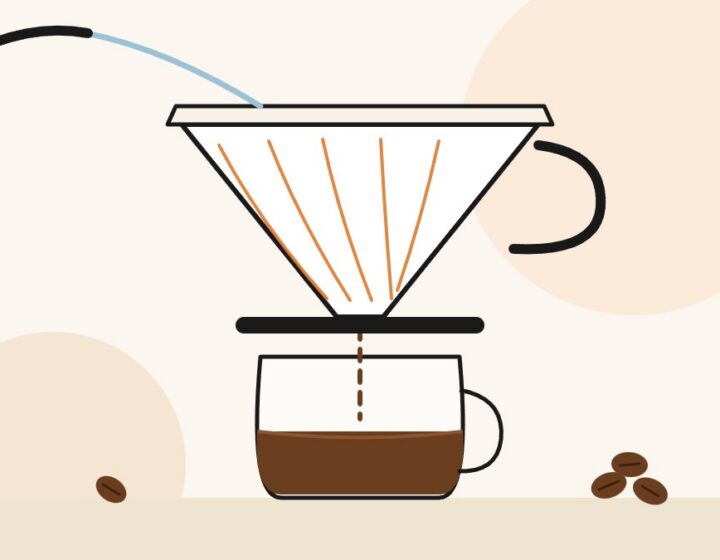
While this guide focuses primarily on espresso-based drinks, café-quality coffee isn’t limited to espresso. For pour-over enthusiasts who want consistency without the manual pour technique, automatic brewers can deliver exceptional results.
Automatic Drip: Technivorm Moccamaster KBGV ($309)
The Technivorm Moccamaster 53930 KBGV is one of the best-regarded automatic drip brewers. Handmade in the Netherlands and SCAA-certified, it brews at the optimal 196-205°F temperature range that most home brewers struggle to achieve manually.
Why it excels:
- Copper heating element maintains precise temperature
- 4-6 minute brew time (optimal extraction window)
- Glass carafe or thermal options
- Simple, repairable design built for long service
Real-world performance: Many reviewers say its coffee compares well with careful manual pour-over. For filter coffee drinkers, it delivers café-quality consistency without any pouring technique.
For those not ready to commit to espresso, a quality drip brewer like the Cuisinart DCC-1200P1 offers programmable convenience and consistent results at an entry-level price point, though it won’t produce espresso-based drinks.
Milk Steaming and Frothing Solutions
Manual Steam Wands: The Traditional Approach
Most quality espresso machines include steam wands, but technique makes the difference between café-quality microfoam and disappointing bubbles.
Automatic Alternatives: Nespresso Aeroccino 3 Milk Frother ($70)
For those who want café-quality milk texture without the learning curve, dedicated milk frothers can deliver excellent results. The Aeroccino 3 creates warm or cold milk foam at the touch of a button, so it works with any espresso source.
Advantages:
- Consistent temperature control
- Multiple texture settings
- No technique required
- Works with any espresso source
Limitations: Less control over final texture, and another appliance to store and clean.
Simplify your milk-texturing routine with the Nespresso Aeroccino 3 Milk Frother.
Scales and Precision Tools
Espresso Scales: Acaia Lunar ($220)
Precision matters in espresso, where 1-2 grams can dramatically affect extraction. The Lunar’s fast response time and water resistance make it ideal for espresso workflows.
Essential features:
- 0.1 g precision with fast response
- Built-in timer for shot timing
- Water-resistant design
- Compact footprint for espresso workflows
For budget-minded precision, the KitchenTour Coffee Scale with Timer, 3 kg/0.1 g High Precision is a good lower-cost alternative.
Dosing and Distribution: Decent Tamper ($85)
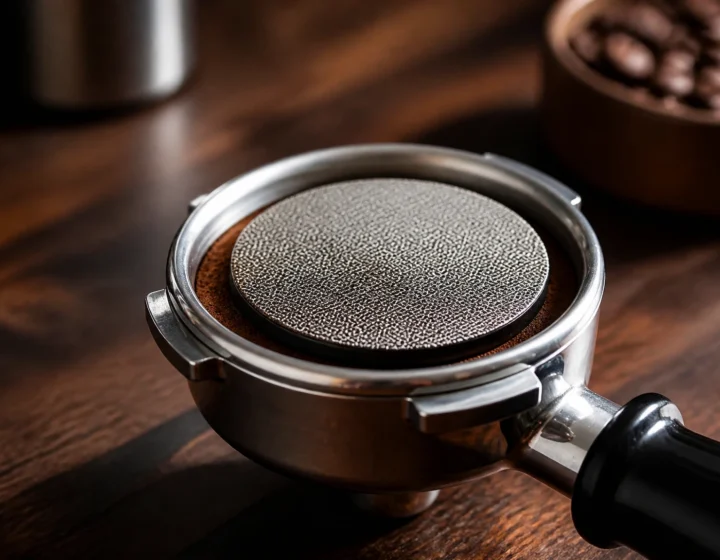
Even distribution and consistent tamping pressure affect extraction uniformity. Quality tools make consistent technique easier.
Professional accessories:
- Calibrated tamper for consistent pressure
- Distribution tools for even coffee bed
- Precision baskets for improved extraction
Complete Setup Recommendations by Budget
Each package below is a complete setup for a different budget.
| Setup Level | Total Cost | Key Equipment | Best For |
|---|---|---|---|
| Starter | $800 | Breville Bambino Plus, Baratza Encore | Coffee shop drink quality on a budget |
| Enthusiast | $2,500 | Rancilio Silvia Pro X, Eureka Specialita | Serious home baristas wanting professional control |
| No-Compromise | $5,000+ | Decent DE1+, Mahlkönig X54 | Ultimate precision and experimentation |
The Starter Setup ($800 total)
- Breville Bambino Plus Espresso Machine BES500BSS: $300
- Baratza Encore Coffee Grinder ZCG495BLK: $140
- KitchenTour Coffee Scale, 3 kg/0.1 g: $40
- Basic tamper and accessories: $120
- Premium beans & accessories: $200
What you get: Genuine espresso capability with automatic milk frothing. This setup produces drinks that rival most coffee shops, with room to grow your skills.
The Enthusiast Setup ($2,500 total)
- Rancilio Silvia Pro X: $1,600
- Eureka Mignon Specialita: $420
- Acaia Lunar scale: $220
- Professional accessories: $200
- Premium beans: $60
What you get: Professional-level capability with dual boilers and precision grinding. This setup eliminates most equipment limitations, making technique the primary variable.
The No-Compromise Setup ($5,000+ total)
- Decent DE1+ or similar: $3,500
- Mahlkönig X54: $900
- Professional accessories: $300
- Premium setup and training: $300+
What you get: Precision and control that match or exceed many commercial setups, with plenty of room for experimentation.
Beyond Equipment: The Skills That Matter
Espresso Fundamentals
- Dose Consistency: Use the same amount of coffee every time (typically 18–20 g for double shots).
- Grind Adjustment: Learn to adjust grind size based on extraction time and taste.
- Tamping Technique: Level, consistent pressure creates even extraction.
- Shot Timing: Aim for 25–30 second extractions for balanced flavor.
Milk Steaming
- Temperature Control: 140–150 °F for optimal sweetness and texture (steamed milk above 160°F begins to lose sweetness as lactose breaks down, while below 140°F doesn’t achieve proper texture).
- Texture Creation: Microfoam should be silky, not bubbly.
- Integration: Proper swirling creates homogeneous milk texture.
- Pouring Technique: Steady flow and pitcher control enable latte art.
Water Quality and Bean Selection
- Water Matters: Filtered water with appropriate mineral content enhances extraction. Your local water can noticeably affect flavor.
- Bean Freshness: Use beans roasted within 2–4 weeks for optimal flavor. While espresso demands freshness, different brewing methods have different requirements—cold brew coffee at home actually benefits from slightly older beans that have off-gassed more CO2.
- Storage: Store beans in airtight containers like Airscape ($30) or Fellow Atmos ($25) to preserve freshness for 2-3 weeks after roasting.
- Experimentation: Try different origins and roast levels to find preferences.
Common Mistakes That Hurt Café Quality
Equipment Errors
- Undersized Grinders: Blade grinders or inadequate burr grinders limit quality regardless of other equipment.
- Temperature Instability: Machines without temperature control produce inconsistent results.
- Inadequate Pressure: True espresso requires 9 bars of pressure—anything less is strong coffee, not espresso.
Technique Problems
- Inconsistent Dosing: Varying coffee amounts make consistent results impossible.
- Poor Tamping: Uneven tamping creates channeling and uneven extraction.
- Overheated Milk: Milk above 160 °F tastes scalded and loses sweetness.
- Stale Beans: Good technique can’t make up for old, stale coffee.
The Economics of Home Café Quality
Upfront equipment costs look high next to a coffee shop habit, but the math works out for regular coffee drinkers.
Break-Even Analysis:
- Annual coffee shop spending: Daily $5 latte = $1,825/year
- Initial investment: Quality home setup ($2,500) + beans ($300/year)
- Break-even point: roughly a year and a half to two years
- After that: ongoing savings
Hidden Benefits:
- No daily trip to the coffee shop
- Complete control over ingredients and quality
- Skill development and personal satisfaction
- Café-style drinks for guests
Maintenance and Longevity
Good equipment needs regular care to last. Essential maintenance supplies include Cafiza espresso machine cleaner ($12), Grindz grinder cleaning tablets ($10), and descaling solution ($15).
Daily Maintenance
- Rinse and wipe down after use
- Empty drip trays and water reservoirs
- Purge steam wands after milk steaming
Weekly Maintenance
- Deep clean removable parts
- Check and clean grinder burrs
- Descale as needed (varies by water hardness)
Professional Service
- Annual professional cleaning and calibration
- Burr replacement every 2–3 years
- Preventive maintenance extends equipment life significantly
Frequently Asked Questions About Home Coffee Equipment
Q: Can you really make coffee as good as a café at home?
Yes. With proper home coffee equipment ($800+ investment) and technique practice, home espresso can match or exceed café quality. You have advantages cafés don’t: fresh beans, controlled variables, and time to perfect each shot without rush-hour pressure.
Q: What’s the most important piece of equipment for café-quality coffee?
The grinder is the most critical investment. Even a $3,000 espresso machine can’t compensate for inconsistent grind size. Start with a quality burr grinder ($400+) before upgrading your espresso machine.
Q: How long does it take to learn to make café-quality drinks at home?
Expect a few weeks of daily practice before your espresso is consistent. Milk steaming usually takes a week or two of dedicated practice.
Q: Is home espresso equipment worth the investment?
For anyone spending $5 or more a day at coffee shops, home equipment can pay for itself within a year or two. You also gain convenience and control over every drink.
Q: Do I need expensive equipment to make good coffee at home?
The $800 starter setup (Breville Bambino Plus + Baratza Encore + scale) produces results that rival most coffee shops. Premium equipment offers refinement and control, but isn’t necessary for café-quality drinks.
Q: What’s the difference between cheap and expensive espresso machines?
Key differences include temperature stability, pressure consistency, build quality, and steaming power. The best espresso machine for home use balances these factors with budget—machines under $300 struggle with consistency, while $500+ machines deliver reliable café-quality results.
Conclusion
Creating café-quality drinks at home isn’t about replicating every aspect of commercial coffee service—it’s about understanding what makes great coffee great and investing in the tools that deliver those results consistently.
The home coffee equipment recommended here is well proven. Whether you start with the Bambino Plus setup or jump directly to prosumer equipment, each represents a significant upgrade over typical home coffee experiences. (And if you need portable solutions, check out our guide to the best coffee equipment for RV living and camping that brings barista-quality coffee on the road.)
Remember: equipment enables great coffee, but doesn’t guarantee it. The best espresso machine in the world won’t compensate for stale beans, poor technique, or inconsistent practice. Start with quality equipment, invest time in learning proper technique, and be patient with the learning process.
If you’re new to home espresso, begin with the starter setup. If you’re sure you’ll stick with it, go straight to the enthusiast level.
Next Steps:
- Choose your budget tier from the recommendations above
- Purchase the core equipment (machine, grinder, scale)
- Invest in fresh, quality beans from a local roaster
- Practice daily—consistency comes with repetition
- Track your shots and adjust variables systematically
Questions about a specific piece of equipment? Leave them in the comments.