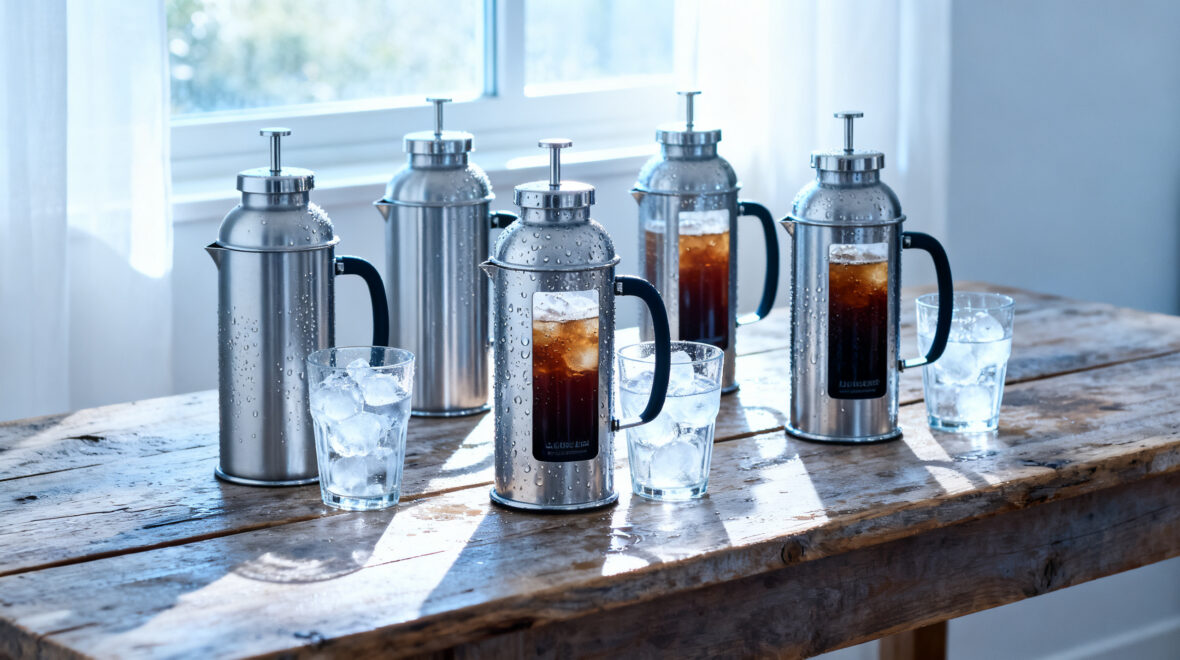
The best cold brew makers for 2026 are the OXO Good Grips ($50-70) for beginners, Toddy Cold Brew System ($35-45) for high volume, Hario Mizudashi ($25-35) for minimalists, Cuisinart Automatic ($80-100) for convenience, and County Line Kitchen ($40-55) for design-conscious brewers.
Hot coffee is a hard sell on a 90°F day, which is where cold brew comes in. But cold brew makers vary: some produce weak, watery concentrate, while others make smooth, strong cold brew with little effort.
Based on specs and long-term owner reviews, these five models consistently produce smooth, concentrated cold brew.
Quick pick
OXO Brew Compact Cold Brew Coffee Maker: a small-batch cold brew maker that fits in the fridge door.
Why Use a Dedicated Cold Brew Maker
You can make cold brew in a jar with coffee grounds and water, but filtering it cleanly and getting repeatable results is harder.
A good cold brew maker solves three problems:
- Filtration precision: They separate grounds from liquid without the gritty aftermath
- Steeping control: Proper immersion and extraction timing
- Concentration consistency: Easy, repeatable ratios
The idea behind cold brew is simple—time replaces heat as the extraction method. Cold brew generally tastes less acidic and more mellow than hot coffee, which gives it its signature smooth taste. But getting the variables right (grind size, water temperature, steeping time, and filtration) makes the difference between good concentrate and weak, muddy coffee.
The 5 Best Cold Brew Makers
| Model | Price | Capacity | Best For |
|---|---|---|---|
| OXO Good Grips | $50-70 | 32 oz | Beginners |
| Toddy System | $35-45 | 36 oz | High volume |
| Hario Mizudashi | $25-35 | 35 oz | Minimalists |
| Cuisinart Automatic | $80-100 | 28 oz | Convenience |
| County Line Kitchen | $40-55 | 34 oz | Design lovers |
1. OXO Good Grips Cold Brew Coffee Maker
Price Range: $50-70
Capacity: 32 oz concentrate
Best For: Beginners and consistent daily brewers
The OXO is reliable and well designed. Its perforated rainmaker top spreads water evenly so no grounds stay dry, and the switch at the bottom lets you control when the concentrate drains.
It is simple to use. Load your coarse grounds, add water, wait 12-24 hours, then flip the switch to release your concentrate. The dual-filtration system (metal mesh plus paper filter) produces clean concentrate without the gritty sediment common with mason jar methods.
Owners consistently praise the OXO for reliable results and easy filtering.
The Verdict: If you want easy cold brew without a learning curve, this is a good choice. It’s not flashy, but it is consistent.
2. Toddy Cold Brew System
Price Range: $35-45
Capacity: 36 oz concentrate
Best For: High-volume households and cold brew purists
The Toddy is one of the original home cold brew systems and has stayed popular for decades. It has no extra features; it focuses on simple, efficient extraction.
Toddy recommends replacing the reusable felt filters every few months, depending on how often you brew.
Toddy Cold Brew System
The Verdict: Large capacity and a smooth concentrate. Ideal for heavy cold brew drinkers who don’t mind a utilitarian design.
3. Hario Mizudashi Cold Brew Pot
Price Range: $25-35
Capacity: 35 oz
Best For: Minimalists and Japanese design enthusiasts
The Hario Mizudashi has a clean, minimalist design that looks more like a serving pitcher than a coffee maker, and it is a capable cold brew maker.
Coffee Bear glass cold brew maker
The Verdict: Simple and good-looking. If you like clean design and don’t need large capacity, this is a strong pick.
4. Cuisinart Automatic Cold Brew Coffeemaker
Price Range: $80-100
Capacity: 7 cups
Best For: Tech lovers and convenience seekers
If you want automation, the Cuisinart is the closest thing to push-button cold brew. This electric model handles the steeping process automatically, with programmable strength settings and a built-in timer.
The standout feature is the spinning steeping technology that gently agitates the grounds during extraction, potentially reducing steeping time while maintaining full flavor development. The permanent filter eliminates the need for paper filters, and the sleek stainless steel design looks at home in any modern kitchen.
The Verdict: The most automated option here. Best for people who want maximum convenience.
5. County Line Kitchen Cold Brew Iced Coffee Maker
Price Range: $40-55
Capacity: 34 oz
Best For: Design-conscious brewers and gift-givers
Sometimes you want cold brew equipment that doesn’t look like laboratory equipment. The County Line Kitchen maker balances function and looks, with a sleek glass carafe and elegant proportions that wouldn’t look out of place in a high-end café.
County Line Kitchen cold brew maker
The dual-filter system (coarse mesh plus fine mesh) produces clean results, while the airtight lid preserves freshness for extended periods. The wide-mouth design makes loading grounds and cleaning significantly easier than narrow-necked alternatives.
The Verdict: A good choice when looks matter as much as results.
How to Choose
Choosing the right cold brew coffee equipment comes down to three key factors:
- Budget vs. Features: The Hario and Toddy offer great value at lower price points, while Cuisinart commands a premium for automation.
- Capacity Needs: Large households should gravitate toward the Toddy or OXO, while smaller households will be fine with the Hario or County Line options.
- Convenience Level: If you want maximum automation, go Cuisinart. For hands-on control, the Toddy or Hario work well. The OXO sits in between.
Tips for Better Cold Brew
The maker is only part of the equation. Your coffee choice, grind consistency, and water quality matter just as much as the equipment. Learning how to make cold brew at home starts with choosing the right equipment and following consistent ratios.
Use coarse grounds (think sea salt texture)—choosing the right grinder makes this step easier. Stick to a 1:8 coffee-to-water ratio for cold brew concentrate (that’s 1 cup coffee to 8 cups water), and steep for 16-18 hours at room temperature for optimal extraction. Then dilute 1:1 with water or milk when serving.
Cold brew is forgiving; slight variations in timing or ratios won’t ruin a batch. A good maker reduces variables and makes results more consistent.
Frequently Asked Questions About Cold Brew Makers
How long does cold brew last in the fridge?
Cold brew concentrate stays fresh for 10-14 days when properly stored in an airtight container.
What’s the best ratio for cold brew concentrate?
Use 1:8 coffee-to-water ratio for concentrate, then dilute 1:1 with water or milk when serving.
Do I need a special grinder for cold brew?
You need one that produces an even, coarse grind. Learn more in our coffee grinder guide.
How much coffee should I use for cold brew?
For concentrate, use 1 cup (85g) of coarse ground coffee per 8 cups of water. This yields approximately 7 cups of concentrate.
Whether you choose the reliable OXO, the high-capacity Toddy, the elegant Hario, the high-tech Cuisinart, or the design-forward County Line, any of these will make smooth, concentrated cold brew. Start with learning proper cold brew technique, then pick the maker that fits your needs. If you’re building a full home coffee setup, see also our emergency brewing kit guide; cold brew concentrate is useful during power outages since it doesn’t need electricity to brew.