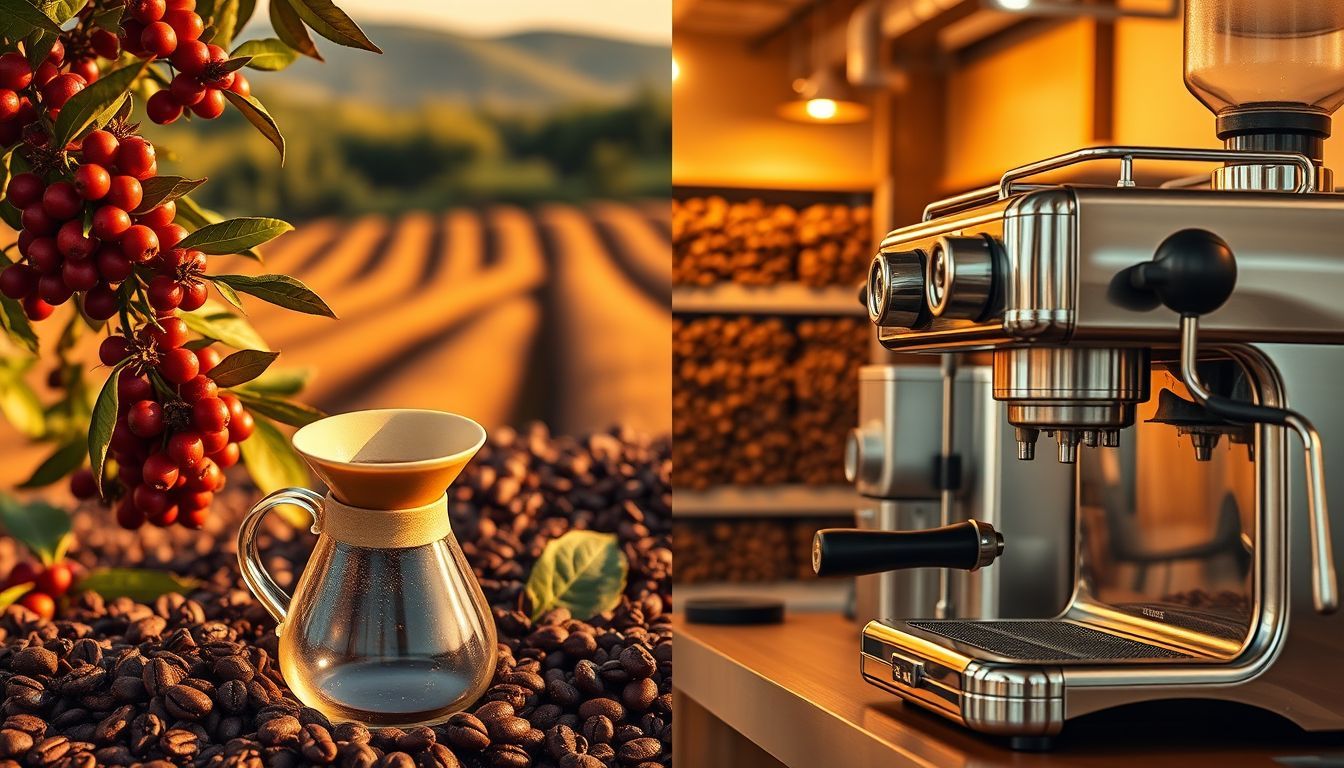
Single origin coffee comes from one specific location (farm, region, or country), showcasing unique flavors shaped by that place’s climate and soil. Blended coffee combines beans from multiple origins to create consistent, balanced flavor profiles year-round. Single origins offer traceability and seasonal variety; blends provide reliability and accessibility.
Every farm, hillside and microclimate leaves its mark on coffee beans. Whether you taste that directly depends on a basic sourcing choice: a single origin or a blend.
Single Origin vs Blend Coffee: Quick Comparison
| Feature | Single Origin | Blend |
|---|---|---|
| Source | One location | Multiple origins |
| Flavor Profile | Distinct, variable | Balanced, consistent |
| Availability | Seasonal | Year-round |
| Price Range | $18-35/12oz | $12-22/12oz |
| Best For | Exploration, education | Daily drinking, espresso |
| Traceability | High | Lower |
Understanding Single Origin Coffee
What Is Single Origin Coffee
Single origin coffee comes from one specific location, whether that is a single farm, a particular region, or even a specific lot within a farm. It shows the character of that place without other coffees mixed in.
Its main appeal is transparency. Bright acidity, floral notes or earthy undertones in the cup can be traced back to specific growing conditions and processing decisions.
Single Origin Coffee Benefits
Single origin coffee suits drinkers who want variety and transparency:
- Transparency: You know where your coffee comes from and how it was grown and processed
- Purity: Unblended expression of one location allows you to taste exactly what that terroir produces
- Variability: Each harvest offers unique characteristics, making every bag a new discovery
- Education: Teaches how environment shapes taste, building your coffee palate and appreciation
- Farm Support: Direct sourcing often means better compensation for small farmers and their communities
- Seasonality: New crops arrive at set times of year, so the selection keeps changing
The Language of Terroir
Terroir, a term borrowed from wine, describes how environment shapes flavor. In coffee it covers altitude, soil composition, rainfall and sun exposure.
On high-altitude farms in regions like Huila, Colombia, at around 1,800 meters, cooler temperatures slow cherry development and concentrate flavor. The resulting cup can carry notes like dark chocolate and orange zest, a direct translation of that specific place.
Altitude, temperature swings and soil all shape coffee flavor. Specialty single origins typically grow between 1,200-2,100 meters, where the science behind coffee acidity explains how elevation and processing produce brighter notes. High-altitude coffees tend to develop more complex acidity and aromatics compared to their lower-elevation counterparts.

Volcanic soils impart mineral complexity, while the daily temperature fluctuations in mountainous regions slow the cherry maturation, allowing sugars to develop more fully.
Processing Methods
The processing method, meaning how the coffee cherry becomes a green bean, also shapes flavor. The same beans can taste quite different depending on how they were processed.
Natural processing, where cherries dry with the fruit intact, often creates wine-like and fruit-forward flavors that some drinkers love and others dislike.
Washed processing strips away the fruit to highlight the bean’s inherent characteristics—the truest expression of varietal and terroir. Honey processing walks the line between both, creating complexity through controlled fermentation. Newer methods such as carbonic maceration and anaerobic fermentation are increasingly common and can add pronounced fruit and floral notes.
Understanding Coffee Blends
How Blends Are Built
A blend combines coffees from several origins, each chosen to play a specific role. Roasters pick components that complement or balance each other.
A skilled blender might use an Ethiopian coffee to add floral top notes, anchor the blend with a full-bodied Brazilian base, and introduce a Guatemalan component for chocolate undertones and structural complexity. The goal is a balanced cup that stays consistent throughout the year.
Example Espresso Blend:
- 40% Brazilian (base, body, chocolate notes)
- 35% Ethiopian (brightness, floral complexity)
- 25% Guatemalan (structure, caramel sweetness)
Consistency Across Seasons
Seasonality is a real challenge in coffee. Harvests happen at different times around the world, and the same farm can produce noticeably different flavors from year to year because of weather, processing and other factors.
Blends solve this challenge by providing consistency. When the Ethiopian component of a blend becomes unavailable or changes character, a skilled blender can adjust ratios or substitute similar origins to maintain the blend’s signature profile. This consistency is why many cafes and roasters rely on blends for their espresso—customers expect their daily cappuccino to taste the same whether it’s January or July.
The Economics of Accessibility
Blends can also cost less. While a limited-lot single origin from a well-known farm might cost $25 per pound, a well-made blend can offer good complexity at a lower price by combining premium origins with solid, less expensive components.
Seasonality and Availability
The Coffee Calendar
Harvest seasons vary by hemisphere and region. Central and South American coffees typically harvest from October through March, while East African coffees peak from October through January. As a result, fresh single origins are only available at certain times of the year.
New-crop Kenyan coffees tend to arrive in late winter and fresh Colombian beans in early spring, so the single origins on offer change through the year.
Resting After Roasting
Some single origins benefit from rest after roasting, developing complexity over weeks or even months. Others shine brightest in their first flush of freshness. Knowing this helps you drink each one at its best.
Blends, by contrast, are typically designed for immediate enjoyment and consistent performance across their shelf life.
Flavor Traceability
The Single Origin Story
With single origins, you can trace flavor notes to their source. That wine-like acidity in your Ethiopian Yirgacheffe? It comes from the specific heirloom varietals grown in that region, the high altitude, and the traditional washed processing. The chocolate notes in your Guatemalan Antigua? That comes from the volcanic soil and shade-growing practices.
What Blends Offer
A well-made blend might combine the brightness of a Kenyan AA with the body of a Sumatran Mandheling and the sweetness of a Brazilian Pulped Natural, creating flavor combinations that no single origin could achieve alone.
Single Origin vs Blend Coffee: Choosing Based on Brewing Method and Taste
Brewing Methods for Single Origins
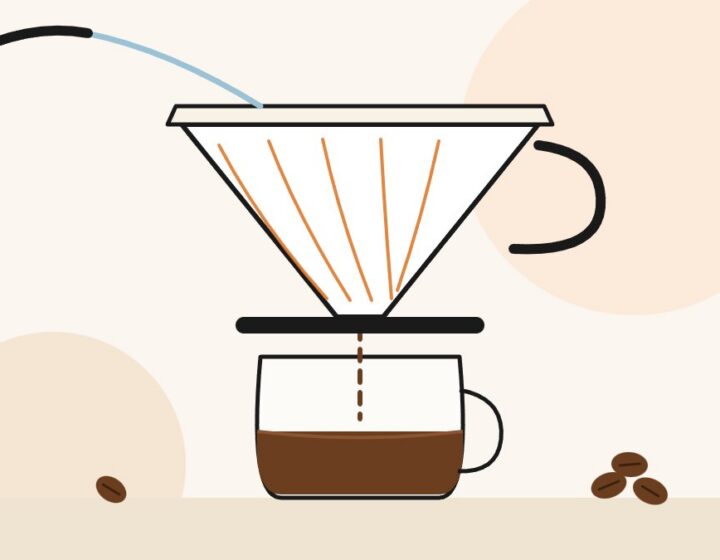
Single origins often do best with brewing methods that highlight their character. A floral Ethiopian coffee suits a pour-over that emphasizes clarity and brightness—especially when brewed with a Hario V60 Ceramic Coffee Dripper, Size 02, White.
(affiliate link: Hario V60 Ceramic Coffee Dripper, Size 02, White)
For immersion methods, a robust, earthy Sumatra works well in a French press such as the MuellerLiving French Press Coffee Maker.
(affiliate link: MuellerLiving French Press Coffee Maker, 34oz)
For those wanting versatility without specialized equipment, the Ninja Single-Serve coffee maker handles both grounds and pods, making it easy to explore single origins without committing to pour-over gear.
Blends and Versatility
Blends are often designed for versatility, performing well across multiple brewing methods. Espresso blends, in particular, are crafted to create balanced shots with good crema, sweetness, and complexity—characteristics that translate well into drip coffee in SCA-certified brewers like the KRUPS Essential, which maintains optimal brewing temperature for consistent extraction.
Many blends work well as both espresso and drip coffee, making them practical choices for households with varied brewing preferences.
Developing Your Palate
If you are new to specialty coffee, single origins offer an education in how origin affects flavor. Tasting coffees from different regions side by side reveals the impact of terroir, processing, and varietal selection. Understanding how temperature affects flavor perception is also useful when comparing single origins. Start with coffees from major growing regions—perhaps a bright Kenyan, a chocolatey Guatemalan, and a wine-like Ethiopian—to understand the spectrum of coffee flavors.
Blends, meanwhile, show how different flavor components work together.
Whichever coffee you choose, a scale helps you measure consistently. The KitchenTour Coffee Scale with Timer is one option.
(affiliate link: KitchenTour Coffee Scale with Timer)
Variety vs Consistency
Single Origins Change
Single origin lots come and go. A lot from a small farm in Honduras might only be available for a few months, so when you find one you like, enjoy it while it lasts. Next year’s harvest will taste different.
Blends Stay Consistent
Blends offer the opposite: a familiar flavor profile that tastes the same day after day, season after season.
Frequently Asked Questions: Single Origin vs Blend
Is single origin coffee stronger than blended coffee?
No—strength refers to coffee-to-water ratio, not origin type. Both single origins and blends can be brewed strong or mild depending on your recipe. The perceived “strength” often comes from roast level and brewing method rather than whether the coffee is single origin or blended.
Are single origin coffees more expensive?
Generally yes. Single origins range from $18-35 per 12oz bag, while quality blends cost $12-22, though exceptional blends can match single origin prices. The premium reflects traceability, limited availability, and often direct relationships with small farms.
Which is better for espresso?
Blends are traditionally preferred for espresso because they provide consistency and balance across the shot’s development. However, many specialty roasters now offer single origin espressos that showcase unique characteristics—these suit people who enjoy changing flavor profiles and seasonal variety.
Can I mix single origin coffees to make my own blend?
Yes, but it’s challenging. Professional blenders consider how each component tastes both alone and combined, adjusting roast levels for each origin before blending. Start by mixing already-roasted beans from complementary origins to experiment with ratios and flavor balance.
How do I know if a single origin coffee is fresh?
Check the roast date (should be within 2-4 weeks) and harvest date if available (within the current crop year). Single origins peak 5-14 days after roasting, though this varies by origin and processing method. Look for one-way valve bags that protect freshness.
Conclusion
A great single origin, say from a small farm in Nariño, Colombia, lets you taste the character of one place.
A carefully made blend offers something different: balance and consistency. Both are valid choices.
The single origin vs blend coffee decision is not about right or wrong; it depends on what you want from a given cup. Many drinkers keep both on hand.
Your Next Steps:
Try single origin coffees from three distinct regions: a bright African coffee, a chocolatey Central American and an earthy Indonesian. Or pick a quality blend for everyday drinking. Modern single-serve coffee makers can now accommodate both single origins and blends effectively, making exploration convenient without sacrificing quality.