The three essential coffee tools for beginners are: (1) a burr grinder ($100-200 range) for consistent grind size, (2) a digital scale for precise measurements, and (3) one reliable brewing device like a French Press, pour-over dripper, or AeroPress. These coffee tools for beginners provide the foundation for excellent coffee without overwhelming newcomers.
Quick pick
Baratza Encore: if you buy only one tool, make it a burr grinder, and this is the simplest reliable one to start with.
When you get into home coffee, it is easy to fill a shopping cart with gadgets that promise café results overnight. You don’t need most of them, including a $300 pour-over kettle with Bluetooth connectivity.
Beginners tend to make the same expensive mistakes, so this guide sticks to the coffee tools that matter. Great coffee does not require a small fortune in equipment.
Three tools make most of the difference. Everything else can wait.
Why You Need Less Gear Than You Think
The coffee world has a gadget problem. Walk into any specialty coffee shop and you’ll find shelves of devices that look like they belong in a chemistry lab, from thermometers that track temperature in real time to grinders that cost more than a month’s rent.
Most of these tools solve problems you don’t have yet. To see which equipment improves your coffee rather than just looking impressive, read our guide on why your coffee tastes bad and how better gear helps.
Starting with a few quality essentials is the more reliable path to great coffee at home, because you can focus on developing your palate and technique instead of getting lost in technical details.
Tool #1: A Decent Burr Grinder
Recommended Coffee Grinder
Baratza Encore Conical Burr Coffee Grinder
View on Amazon
Why a Blade Grinder Holds Your Coffee Back
If you take away only one thing from this post, let it be this: your grinder matters more than your brewing method or your water, and it decides how much of your beans’ flavor you get.
Brewing coffee is an extraction process. When hot water meets coffee grounds, it dissolves the soluble compounds that create flavor. The size and consistency of those grounds determine how quickly and evenly this extraction occurs.
The Science of Extraction
Blade grinders chop coffee into an uneven mix of dust, chunks, and everything in between. Some particles over-extract and taste bitter, while others under-extract and taste sour, so the cup ends up both.
What Makes a Burr Grinder Different
Burr grinders use two revolving abrasive surfaces to crush coffee beans into uniform particles. That consistency matters because extraction depends heavily on particle uniformity.
The same beans ground on a quality burr grinder rather than a blade grinder generally produce a cleaner, sweeter cup.

The Sweet Spot for Beginners
You don’t need to spend $500 on a grinder (yet). As of 2026, entry-level burr grinders in the sweet spot for beginners sit around $100-200. Look for grinders with 40+ grind settings, steel or ceramic burrs, and consistent particle size across the range. Brands like Baratza, Oxo, and Capresso offer excellent entry-level options that will serve you well for years.
Tip: Buy used. Coffee grinders are built to last, and you can often find barely-used models well below retail price. Just make sure the burrs aren’t worn down—they should feel sharp and show minimal signs of wear.
Tool #2: A Simple Scale
Why Scoops Are Inconsistent
Coffee scoops measure volume, but coffee beans vary in size, density, and moisture content. A scoop of dense light roast Ethiopian beans weighs more than a scoop of dark roast Brazilian beans.
This inconsistency is why your coffee tastes different every day, even when you think you’re doing everything the same. One day the coffee is too strong, the next it is weak.
Why Ratios Matter
Professional baristas don’t measure coffee by volume—they measure by weight. And for good reason. Weight gives you precision, repeatability, and most importantly, the ability to adjust your recipe systematically.
The golden ratio for most brewing methods falls somewhere between 1:15 and 1:17 (coffee to water by weight). Once you find your preferred ratio, you can scale it up or down easily. Making coffee for two instead of one? Double both amounts.
What to Look For in a Coffee Scale
You don’t need a scale that connects to your smartphone. You need accuracy, speed, and reliability. Look for scales that:
- Measure to 0.1-gram precision
- Have a response time under 2 seconds
- Include a timer function
- Can handle at least 2kg capacity
- Have a water-resistant design
The $25-40 range offers everything most home brewers need.
It Helps You Learn Faster
Consistent measuring also speeds up learning. Once the ratio stays the same, you can taste the effect of grind size, water temperature, and brewing time.
Tool #3: A Reliable Brewing Device
The Paradox of Choice in Coffee Brewing
Walk down the coffee aisle of any kitchen store, and you’ll face an overwhelming array of brewing devices. Pour-over drippers, French presses, AeroPresses, siphon brewers, cold brew makers, and more elaborate devices.
With this much choice, it is easy to bounce between brewing methods without mastering any of them.
The Case for Mastering One Method
It’s better to become excellent at one brewing method than mediocre at five. Each brewing device has its own quirks, timing, and technique requirements. Spreading your attention across multiple methods means you’ll never develop the muscle memory and intuition that separates good coffee from great coffee.
Committing to one device for your first six months lets you build real skill faster than hopping between methods.
Three Beginner-Friendly Brewers
French Press
French press brewing is hard to mess up, gives consistent results, and forgives small mistakes. The immersion brewing method means all the coffee grounds are in contact with water for the same amount of time, reducing the impact of uneven pouring or timing variations.
Pour-Over (V60/Chemex)
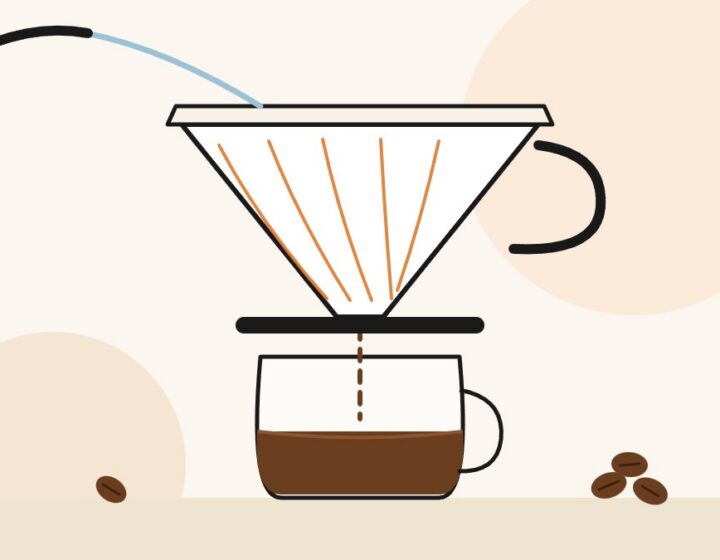
Pour-over brewing teaches you a lot about extraction. You’ll develop an intuitive understanding of extraction, learn to taste the impact of grind size adjustments, and build the foundation skills that transfer to every other brewing method.
AeroPress
The AeroPress combines the forgiveness of immersion brewing with the clarity of filtered coffee. It is hard to make bad coffee with an AeroPress, and the short brewing time means you can iterate quickly when dialing in a new coffee.
How to Choose
Choose based on your priorities:
- Low maintenance, consistent results: French Press
- Want to learn and improve: Pour-over
- Quick, versatile, travel-friendly: AeroPress
Don’t overthink it. Any of these three will serve you well for years. Once you’ve mastered manual brewing, you might explore automatic drip coffee makers for convenience.
What About Everything Else?
The “Nice to Have” vs. “Need to Have” List
You might be thinking: “But what about gooseneck kettles? Temperature-controlled water? Fancy filters? Bloom timers?”
All of those can improve your coffee, but they are refinements, not foundations.
Once you’re comfortable with your grinder, scale, and brewing device, it makes sense to look at further upgrades.
The Upgrade Path
When you’re ready to upgrade, our coffee equipment buyer’s guide for 2026 covers the next tier of upgrades in detail. Give yourself at least six months with the basics before considering these additions in order:
- Gooseneck kettle for pour-over precision
- Water filtration system
- Better grinder with more adjustment range
- Temperature control for water
- Specialty filters and accessories
When you’re ready for a premium automatic option, models like the Technivorm Moccamaster are a long-standing benchmark in drip brewing.
A Simple Starter Kit
If you want a short shopping list, these cover all three tools without overspending:
- Grinder: the Baratza Encore is the long-running default for filter coffee, with parts sold separately so it can be repaired.
- Scale: the Hario V60 Drip Scale weighs to 0.1 g and has a built-in timer.
- Brewer (pour-over): the Hario V60 plastic dripper is inexpensive and holds heat well.
- Brewer (most forgiving): the AeroPress is hard to get badly wrong and easy to clean.
- Brewer (full-bodied, several cups): the Bodum Chambord French Press needs no filters.
Your First Week: Putting It All Together
Here is how to use these tools together. Start with these fundamentals:
The Starting Ratio: Use 1:16 coffee to water (e.g., 20g coffee to 320g water). This ratio works well across most manual brewing methods and gives you a solid baseline to adjust from.
Basic Grind Size: Start with a medium grind—about the consistency of sea salt. If your coffee tastes sour or weak, grind finer. If it tastes bitter or harsh, grind coarser.
Simple Brew Recipe:
- Weigh your coffee and water using your scale
- Grind your beans fresh before brewing
- Follow your chosen brewing method’s basic technique
- Take notes on what you taste and adjust one variable at a time
The Total Investment: Budget Breakdown
Here’s roughly what this setup costs:
- Burr grinder: $100-200
- Scale: $25-40
- Brewing device: $20-50
- Total: $145-290 for a complete coffee gear starter kit
This is less than many people spend on a single piece of fancy equipment, and it covers everything you need to make very good coffee at home.
5 Mistakes to Avoid in Your First Month
- Buying pre-ground coffee: Your new grinder is useless if you’re not using fresh beans. Grind immediately before brewing.
- Inconsistent measurements: Use your scale every time instead of eyeballing.
- Method-hopping: Resist the urge to buy three different brewing devices in your first month. Master one.
- Ignoring water quality: If your tap water tastes bad, your coffee will too. Use filtered water.
- Upgrading too soon: Give yourself at least 90 days with your basic setup before considering upgrades. Learn what you need before buying more.
Frequently Asked Questions
How much should I spend on my first coffee grinder?
For beginners, the sweet spot is $100-200. This price range gets you a quality burr grinder that will last for years and produce consistent results. While you can spend more, it won’t dramatically improve your coffee until you’ve mastered the basics. The Baratza Encore, at around $170, is a common default for entry-level grinders.
Can I make good coffee without a scale?
Technically yes, but it’s much harder. A scale removes the guesswork and gives you consistency—the foundation of improving your coffee. For $25-40, it’s the best investment you can make after a good grinder. Without it, it is hard to repeat a good brew or troubleshoot a bad one.
Which brewing method is easiest for beginners?
French Press is the most forgiving for absolute beginners because the immersion method is hard to mess up. However, pour-over methods like the V60 or Chemex teach you more about coffee and help you develop better technique faster. Choose based on whether you prioritize ease or learning.
Do I really need to grind coffee fresh?
For the best flavor, yes. Coffee begins losing aromatic compounds within minutes of grinding, so pre-ground coffee, even if it was ground this morning, has already lost some of its aroma. A grinder gives you both consistency and freshness.
Technique Matters Most
It’s Not About the Gear
The biggest factor in coffee quality isn’t your equipment; it’s your attention and consistency. Great coffee can come from $50 worth of gear, and bad coffee from a $2,000 setup.
Great coffee comes from understanding your ingredients, being consistent with your process, and paying attention to the results. These three coffee tools for beginners—a burr grinder, a scale, and a reliable brewing device—give you the foundation to develop those skills without distraction.
Start Brewing, Stop Shopping
The best time to buy your next piece of coffee equipment is when you can clearly articulate what problem it solves and why your current setup can’t solve it. Until then, focus on the fundamentals.
Buy these three tools, learn to use them well, and put the money you save toward good beans.
Getting Started
Start with these three tools, and commit to mastering them for your first 90 days. Track your ratios, adjust your grind size, and taste the difference that consistency makes. This beginner coffee gear—a burr grinder, a scale, and a reliable brewing device—is all you need to start.
Want to dive deeper? Check out our beginner-friendly equipment guides for more.